Tag Archives: tiny house roof

A “Tiny” Bit of a Challenge . . .

Who would think that building something so “tiny” could possibly be so challenging?

I know, I know. This update on the progress of the house is LONG overdue. Suffice it to say — I took on WAY too many responsibilities over the summer and into the autumn this year. On the other hand — a person’s gotta live, don’t they? As a freelance artist and teacher, if I don’t take the work that’s available, devote mindful presence and energy to it (and ultimately feel gratitude for it), I’m in a lot of trouble.

That said, onto the details about the house and its construction.

The frame went up with minimal difficulty.
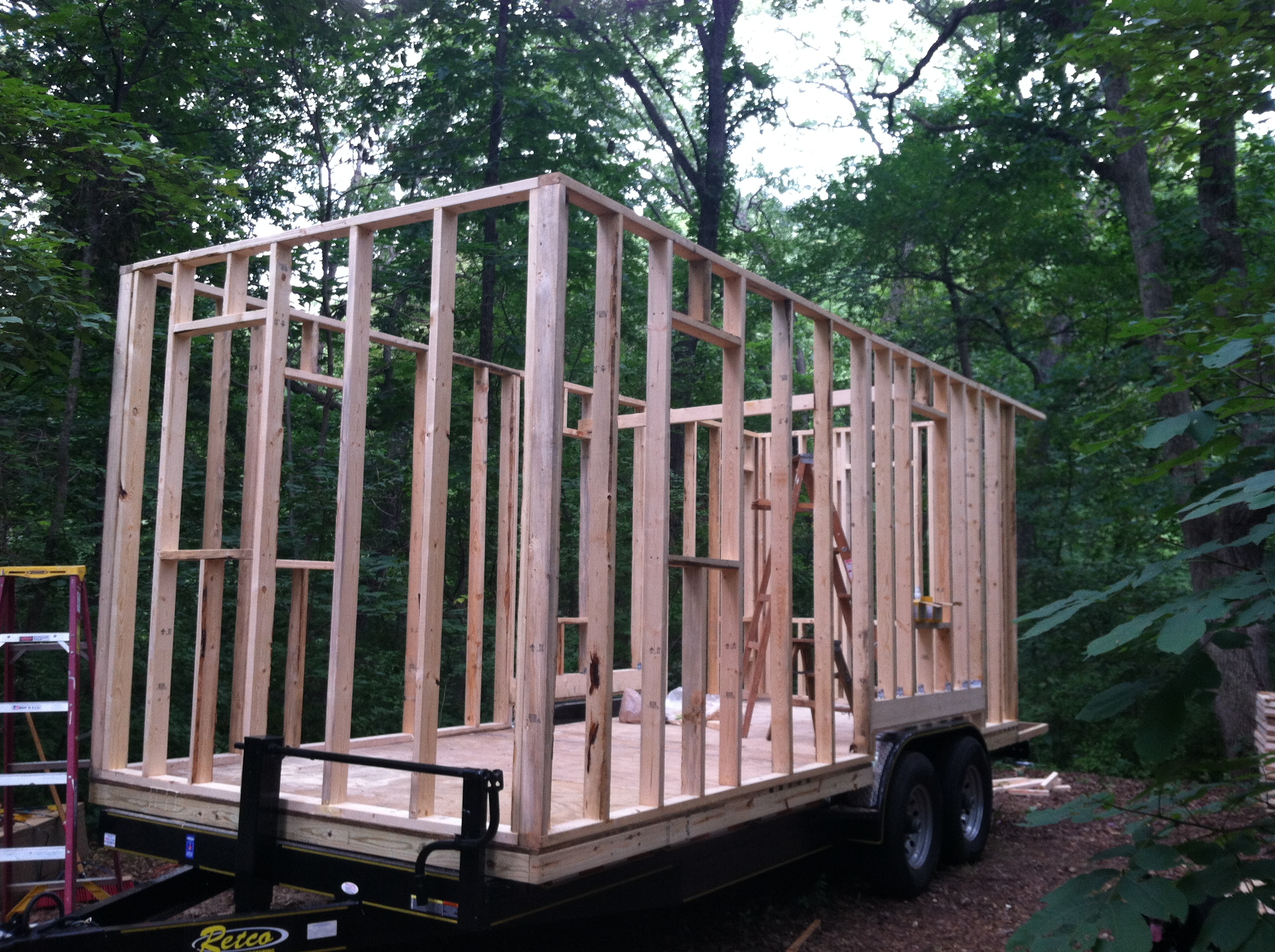
IMG_5129

See?

Then there was the roof.

Ohhh… the roof.

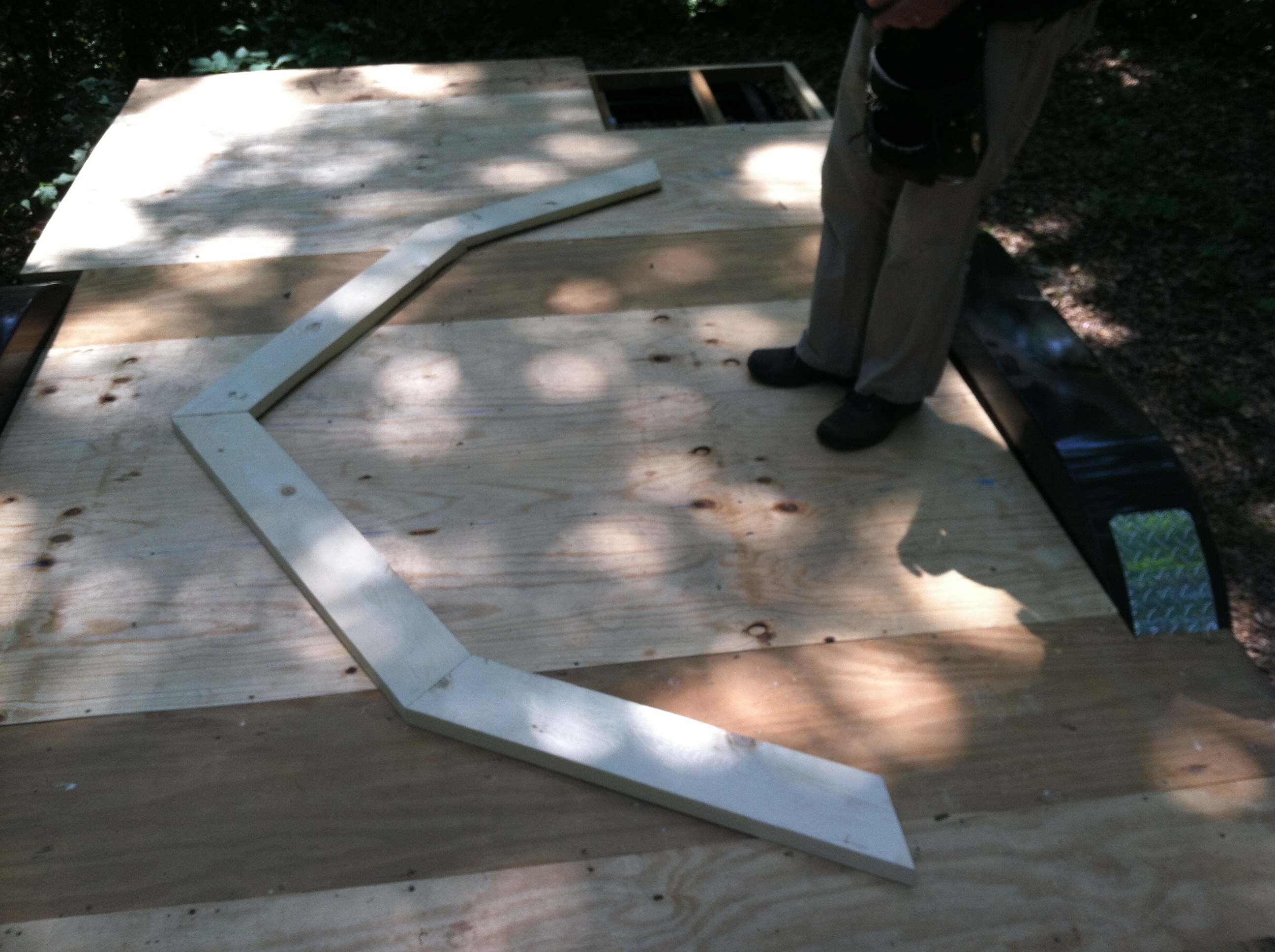
There are a lot of details I could offer about the roof and why we chose to change its pitch, but it’s confusing so I won’t. We altered the style of the roof to a gambrel or ‘hip’ roof. My father has built at least two buildings with gambrel roofs on them, and they do offer quite a bit more space in the loft, so we chose to go ahead and do it.

Dad did all the calculations, and we started building trusses.
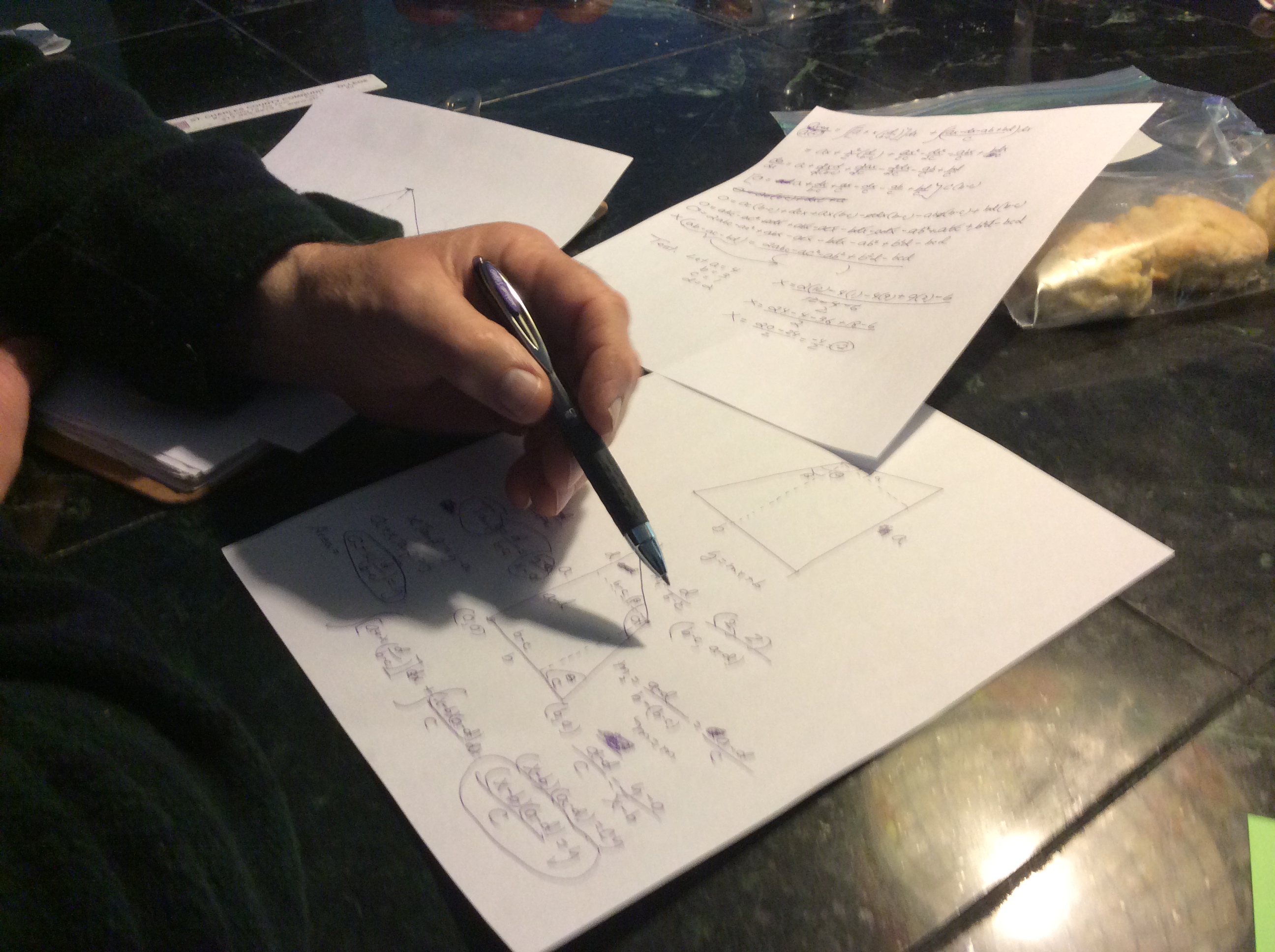
IMG_1107 IMG_5004

We built all these trusses so that we could put up the frame and have the trusses ready to put up. It all seemed so simple.
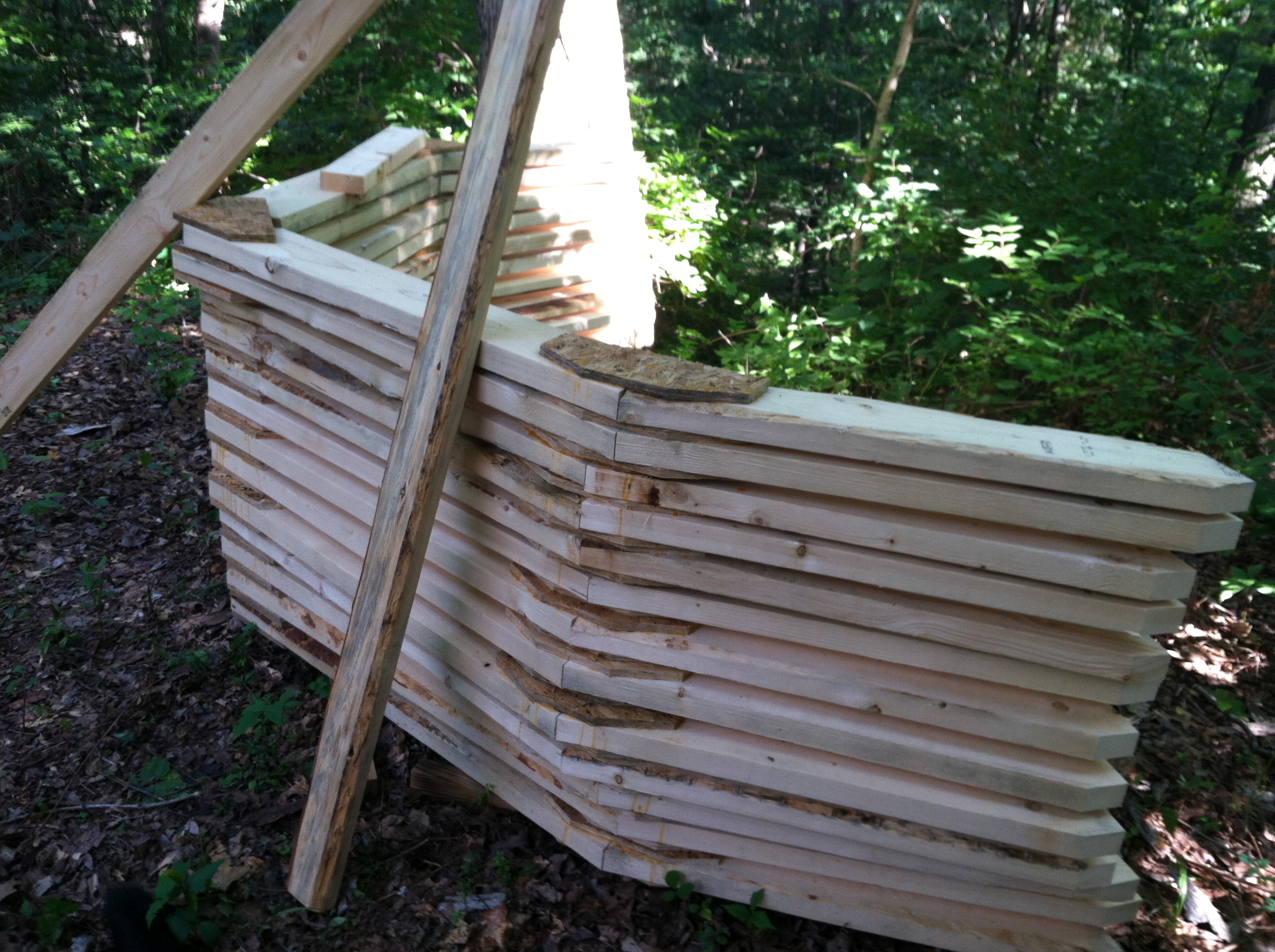
Great big stack 'o' trusses.

Great big stack ‘o’ trusses.

At first, it was. We got some anchors for the trusses, measured them out, screwed them in, and put up the trusses. It took shockingly little time to do. Once they were up for a few days, however, we realized that we’d built a few of them incorrectly. No big deal, we thought. We’ll take the faulty ones down and re-build a few trusses. When we took them down, however, we realized that the structure wasn’t going to be nearly stable enough without a rafter board. Even with the sheathing and roofing to stabilize the structure, the use of trusses isn’t nearly as stable as rafters and a rafter board when you subject the structure to torsion. If you put a stick building on a trailer and tow it, there’ll be torsion. Oh, yes. Torsion-tastic.

I love and admire my father deeply, and am eternally grateful for his assistance, problem-solving abilities, experience, and brilliance. I have also since learned that it is unwise to back off when he tells me that the additional reinforcements I add to the structure are “overkill”, and I no longer defer automatically to his opinions about building. If I were building a structure that wasn’t intended to move on a trailer, they would be entirely valid. NO question. When it comes to building a tiny house, however, he hasn’t done a quarter of the homework or research that I have, and since I’m the one taking the risk and hoping to live in it, I’m going to default to the research provided by those in the know on this particular area. Luckily, between us we’re a pretty solid team. We rarely argue, we work smoothly together with a great deal of mutual support and encouragement, and when one of us screws up, we (eventually) laugh and move forward with ease.

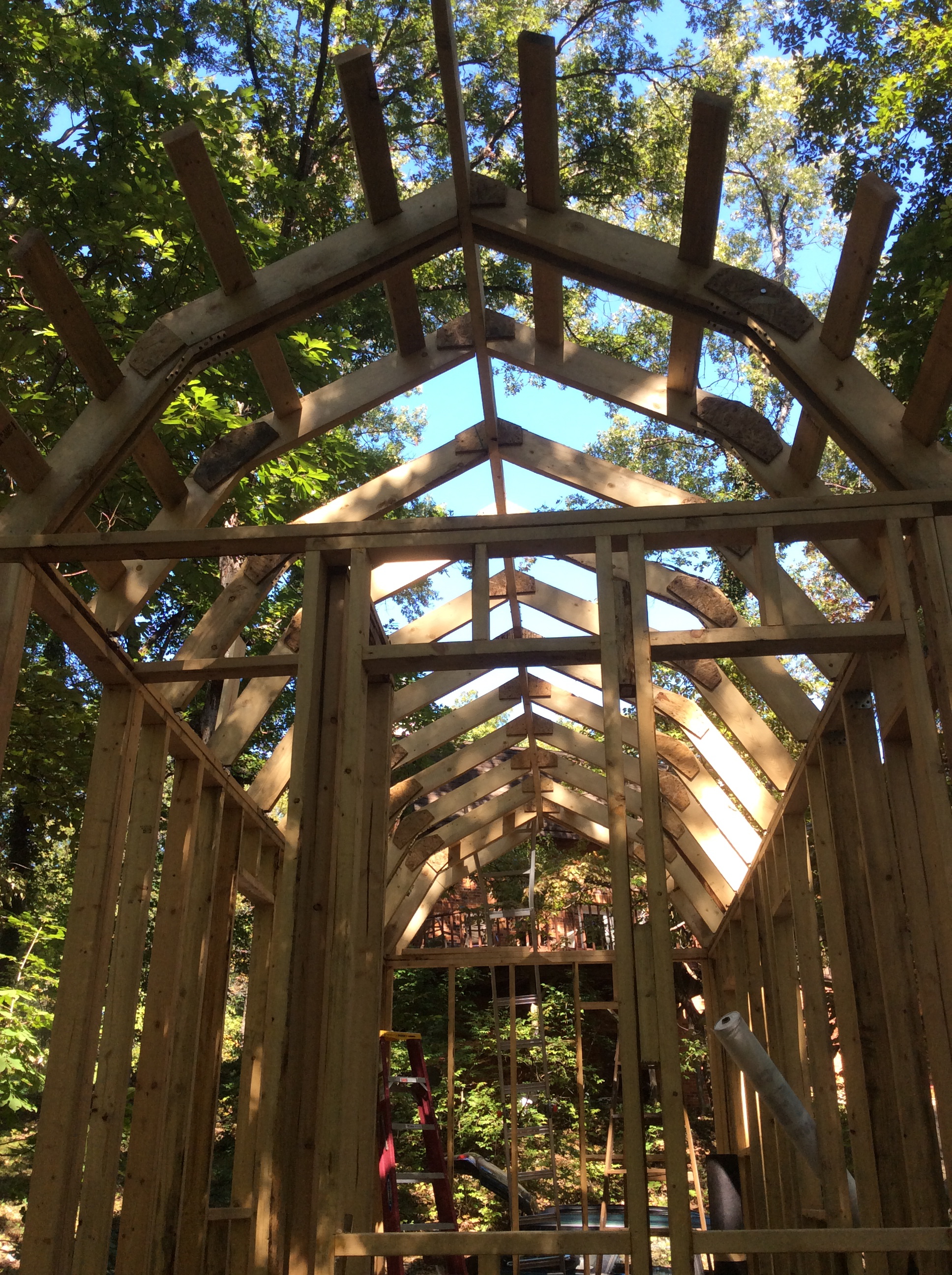
We took the trusses and split them in the middle to turn them into rafters, and attached them to the rafter board.
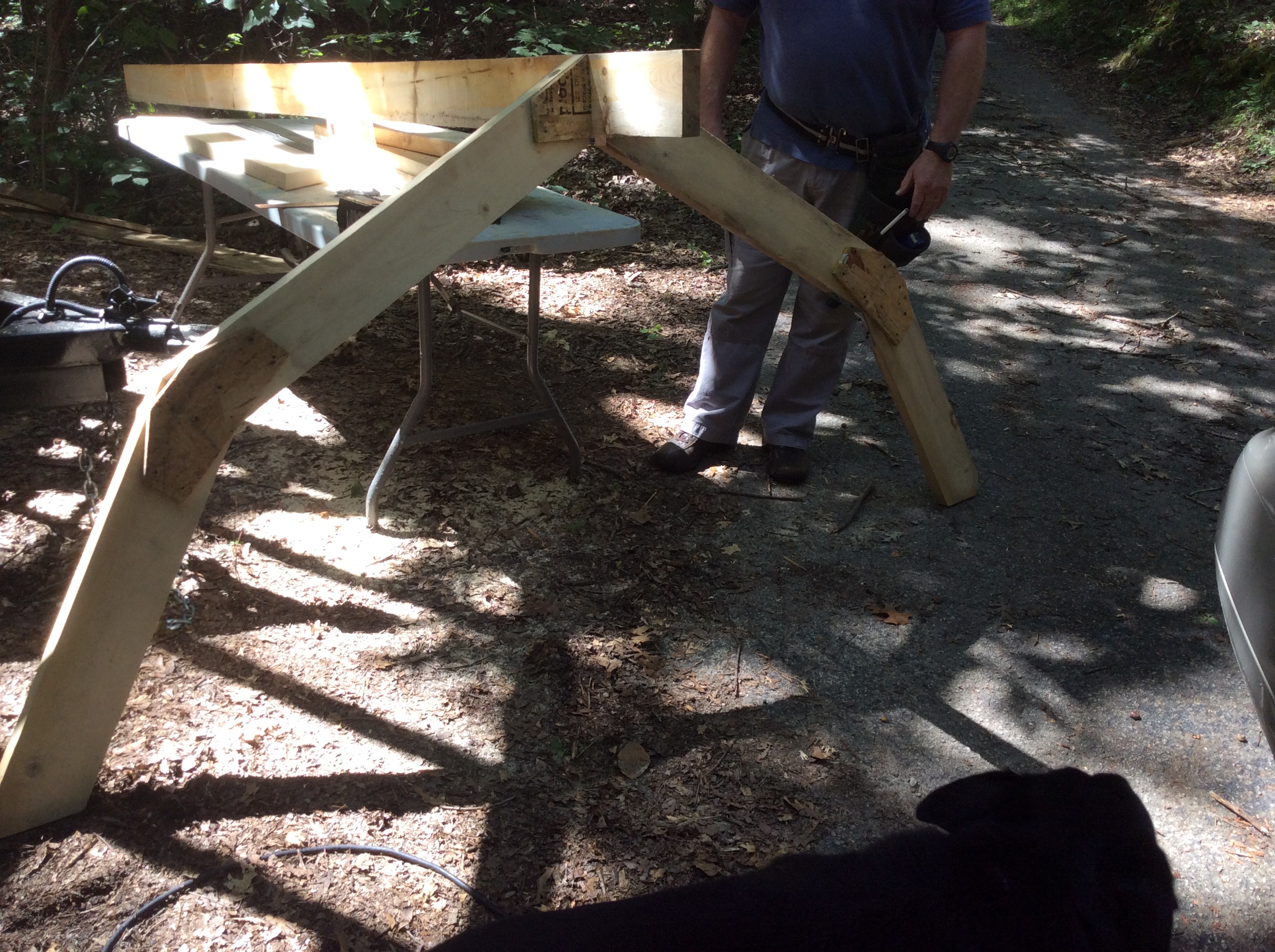
Trusses turned into rafters and attached to the rafter board.

Trusses turned into rafters and attached to the rafter board.

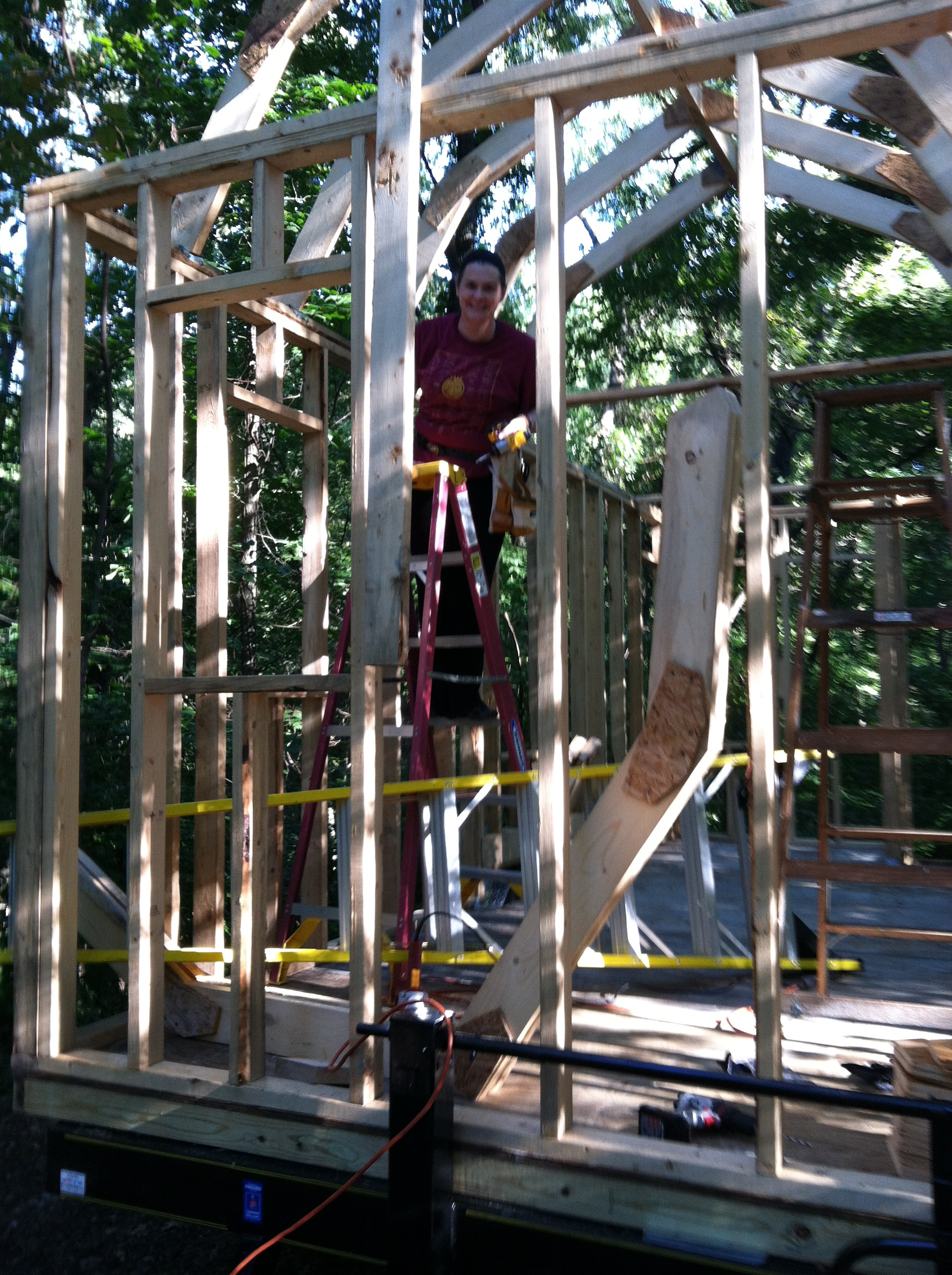
I wish someone had videotaped or taken photos of us trying to get that rafter board into place; I couldn’t describe it to you anymore because I remember very little of the process. It was kind of traumatic and we were lucky to have survived it. But once it was in place and we could attach the rafters to it, as you can see from the photos below (taken by my mother as she was passing by on her way home from work), all was well in the world of tiny house construction.
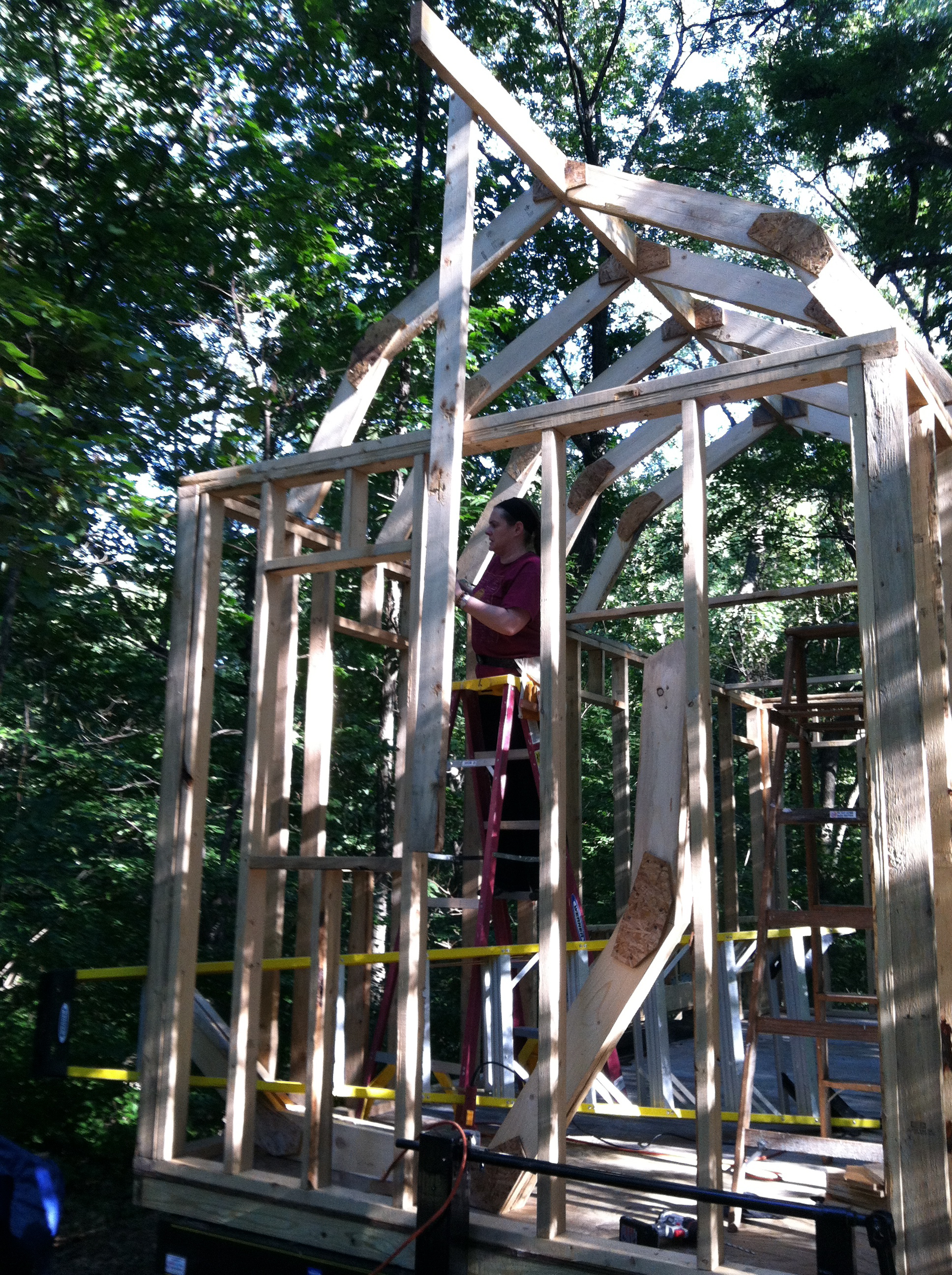
Hard at work fastening rafters into place.
Hard at work fastening rafters into place.

Happy Nat holding her handy impact driver.

Happy Nat holding her handy impact driver.

You can clearly see that the season has moved on from when these photos were taken, however. Once school started, time for building was cut right down to only 2-3 mornings or afternoons a week (max), and once rehearsals for A Christmas Carol started, it was cut down to one day a week. At the end of October, a disc in my lumbar region started to bulge and was decidedly unhappy, so things have ground to a halt until yesterday to allow for recovery. A few years back I had a disc in my neck that decided to bulge and healed very nicely despite the extent of the injury, so this is familiar (if extremely unpleasant) territory.

Before the disc kicked up, however, we managed to get this done:
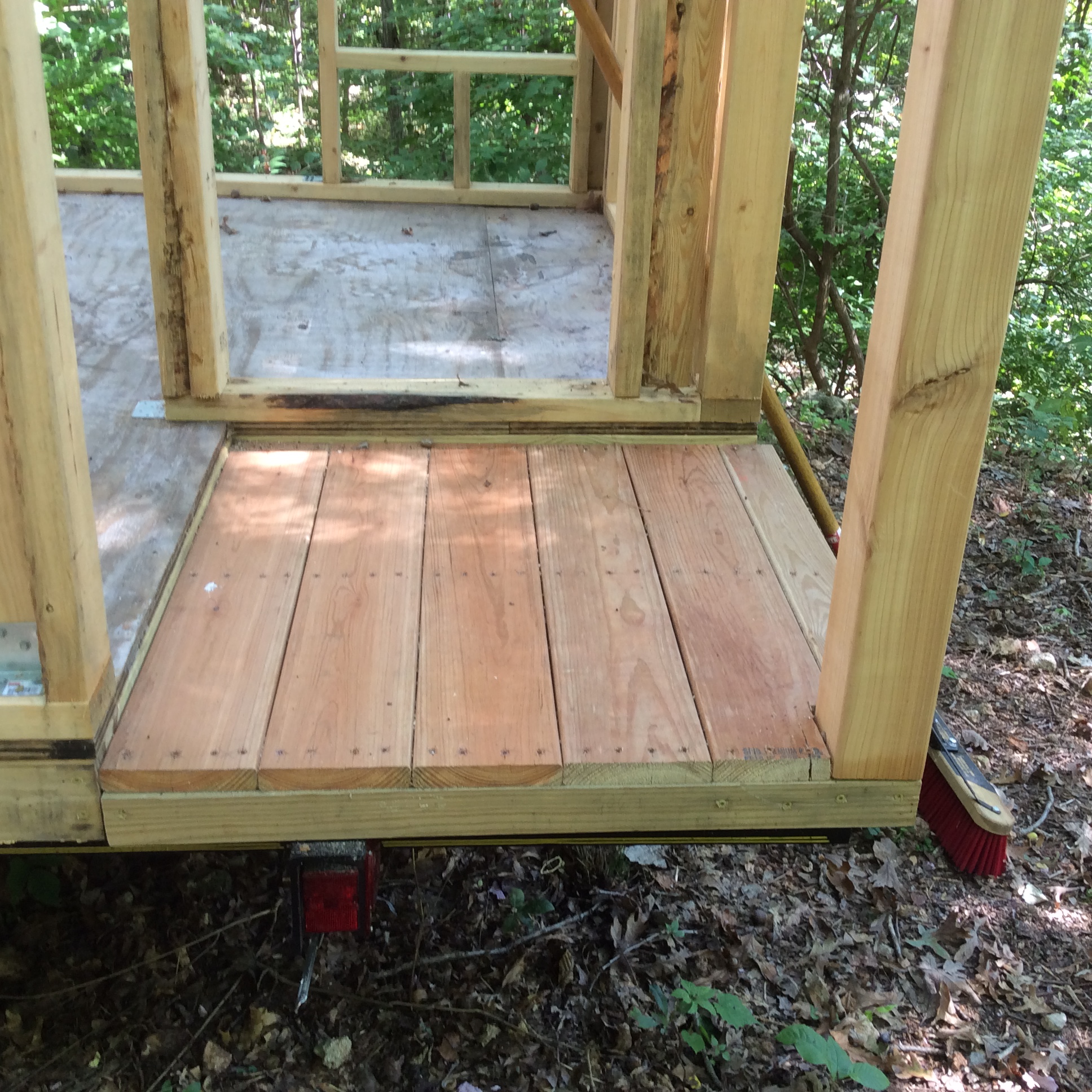
Front porch, which is located at the back of the actual trailer.
Front porch, which is located at the back of the actual trailer.

Looking at the front of the house, which is at the back of the trailer itself. Framing that area of the roof wouldn't have happened without our friend, Bob, who "climbs like a squirrel".

Looking at the front of the house, which is at the back of the trailer itself. Framing that area of the roof wouldn’t have happened without our friend, Bob, who “climbs like a squirrel”.
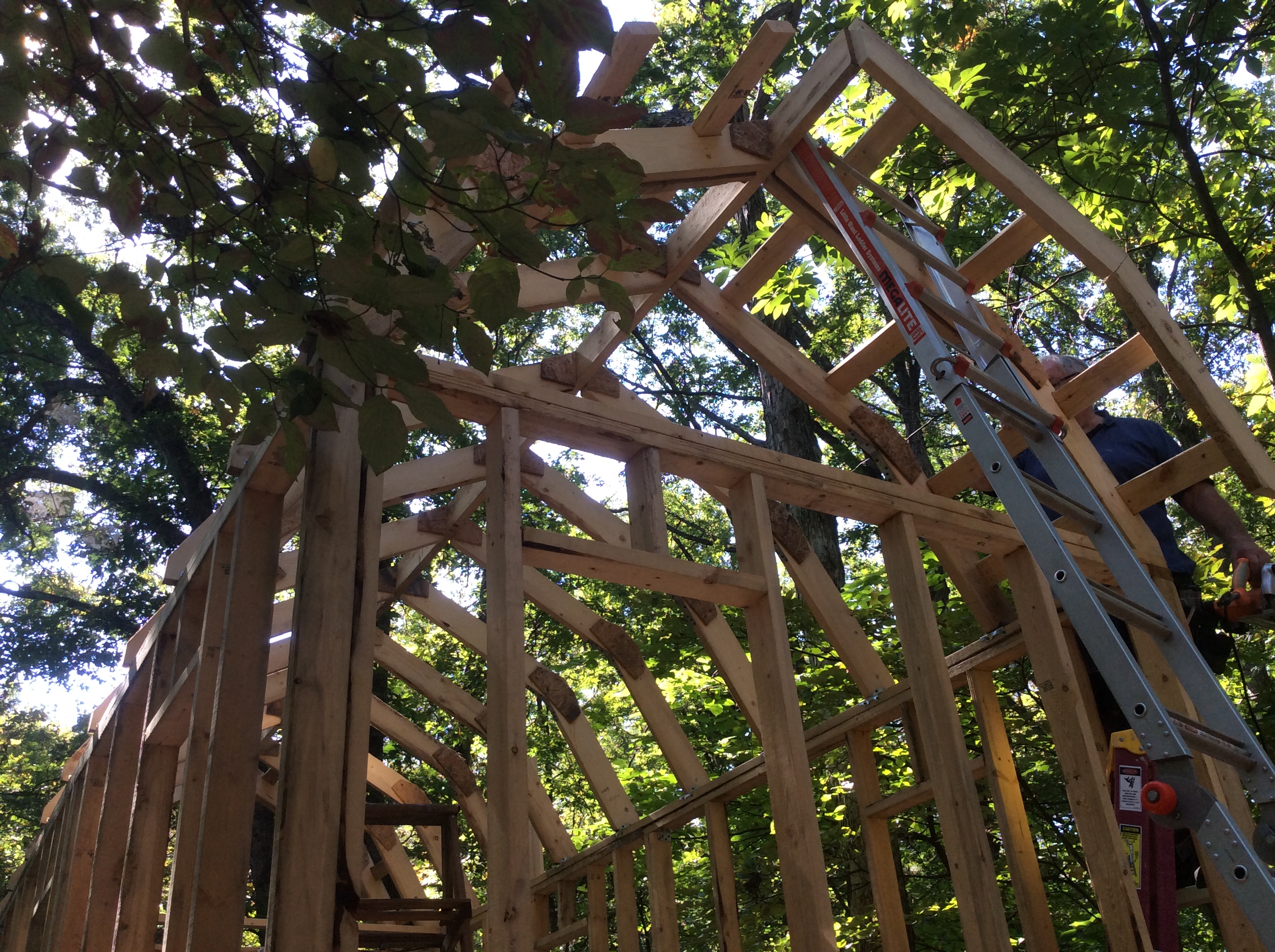
Looking at the back of the house, which is also the front of the trailer.
Looking at the back of the house, which is also the front of the trailer.

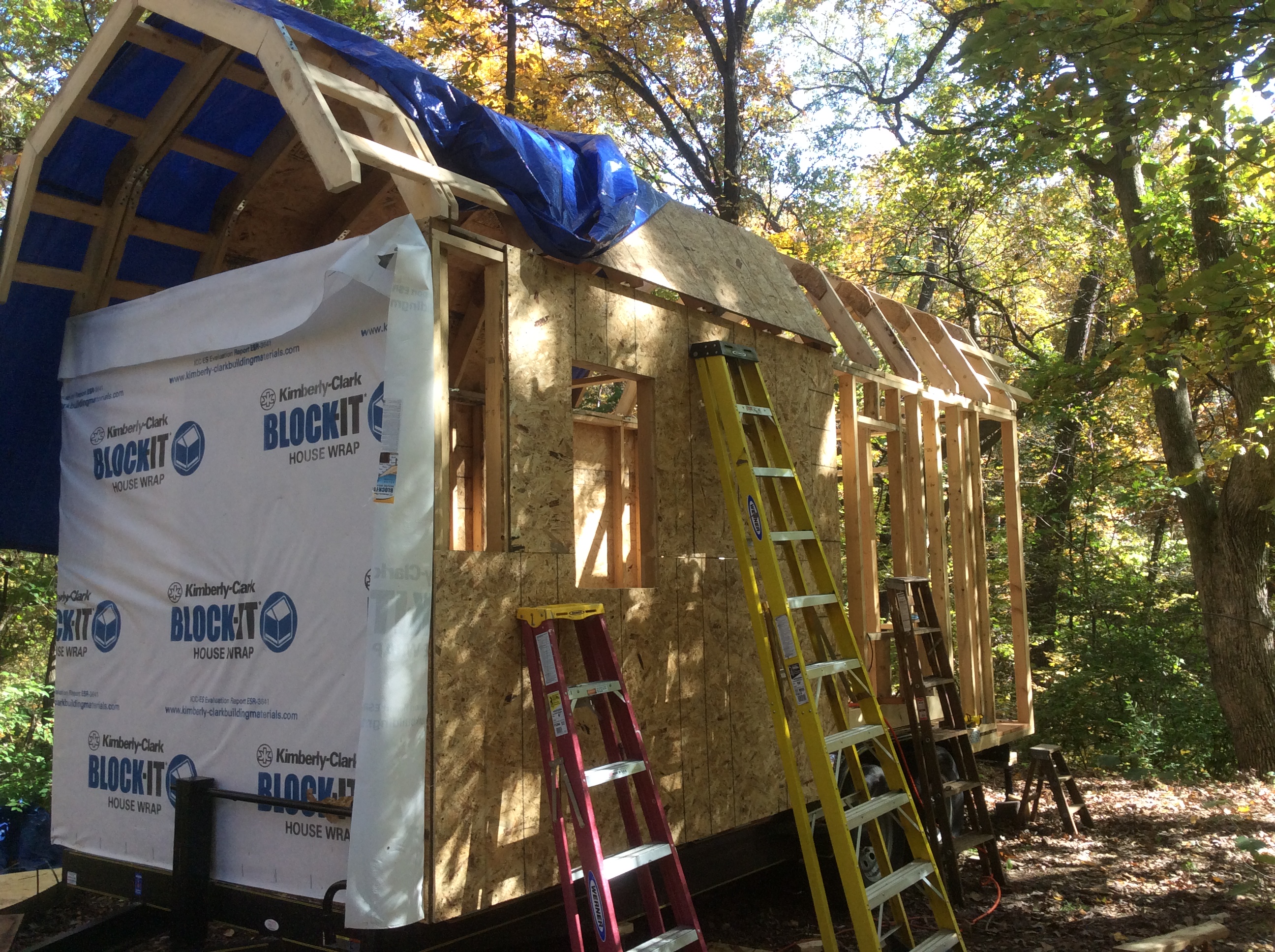
Halfway sheathed and wrapped, and with about 2/5ths of the roof sheathing in place.
Halfway sheathed and wrapped, and with about 2/5ths of the roof sheathing in place.

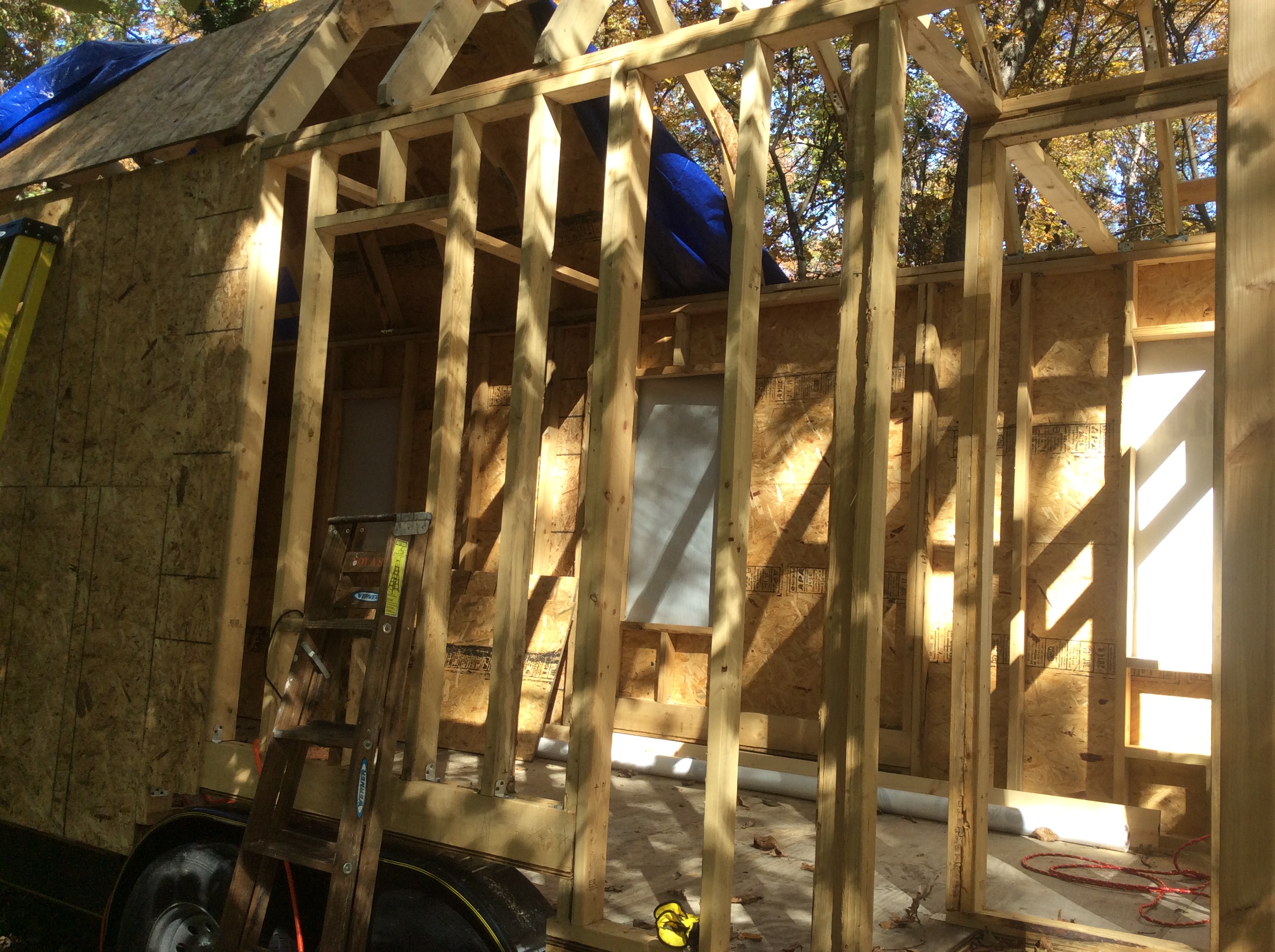
Almost a "cutaway" view of the frame, sheathing, and house wrap process.
Almost a “cutaway” view of the frame, sheathing, and house wrap process.

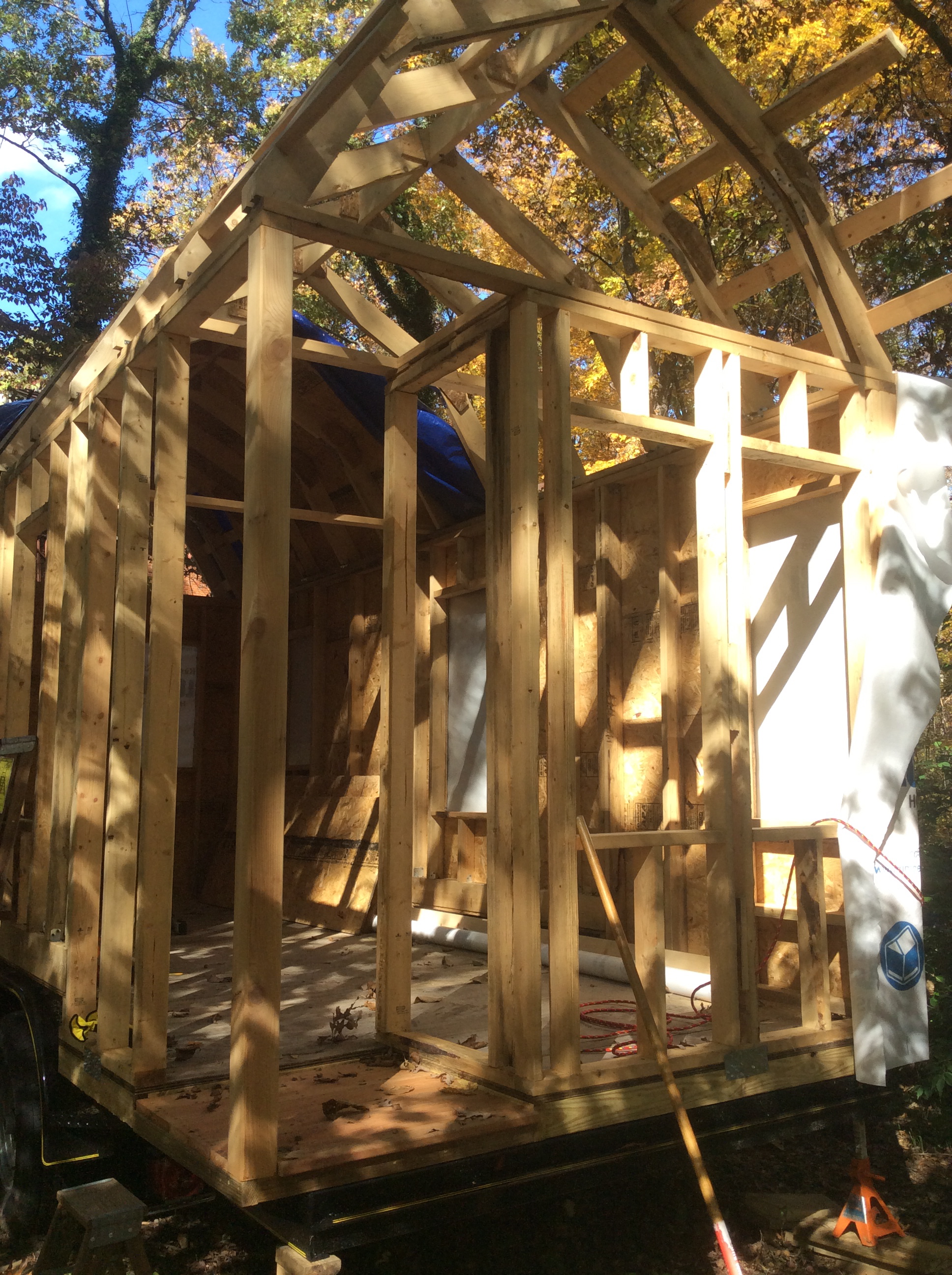
Another cutaway taken from the front of the house.

Another cutaway taken from the front of the house.

Presently, we’ve gotten all of the sheathing put up on the sides and roof, and the house is wrapped. One gable end is finished, the other one isn’t. We have the roofing all ready to go. . .and we’re slightly terrified of doing it. Before attempting it, we’ll be calling our friend, Bob, to come over and assist, and probably a few others as well. This job is the one I fear most, aside from installing the skylights. (!) The windows have been ordered, but between foul weather, riots, and holidays, I’m not sure how much longer it will take for them to arrive.

I’ll take my iPad down with me tomorrow to take a few more photos for a shorter update tomorrow. I need to do that before the end of the semester hits full whammy, or you won’t hear from me again until afterward.

Wow. What a ride.
Movin’ On Up!

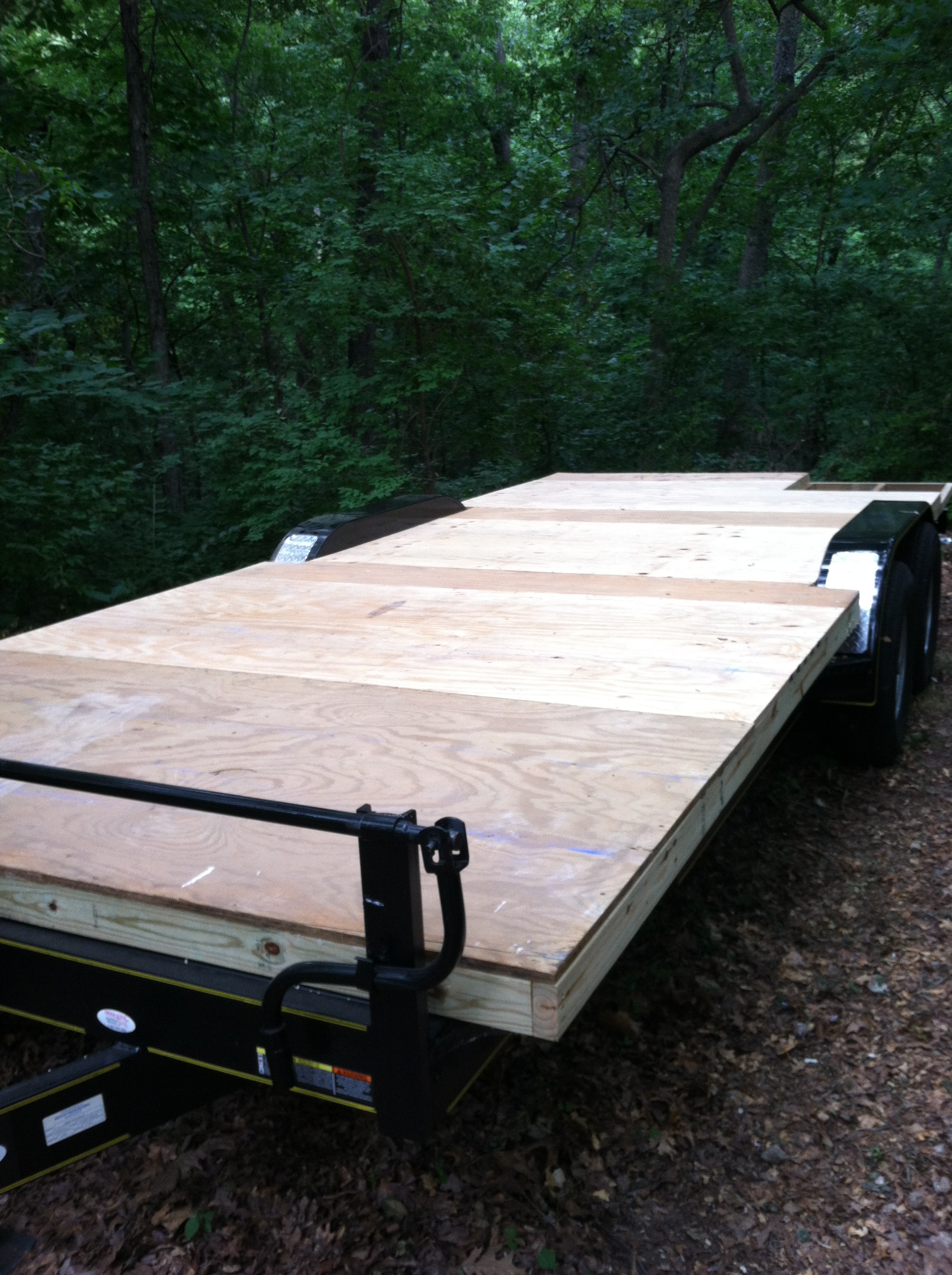
On Monday, dad and I finished the floor! 

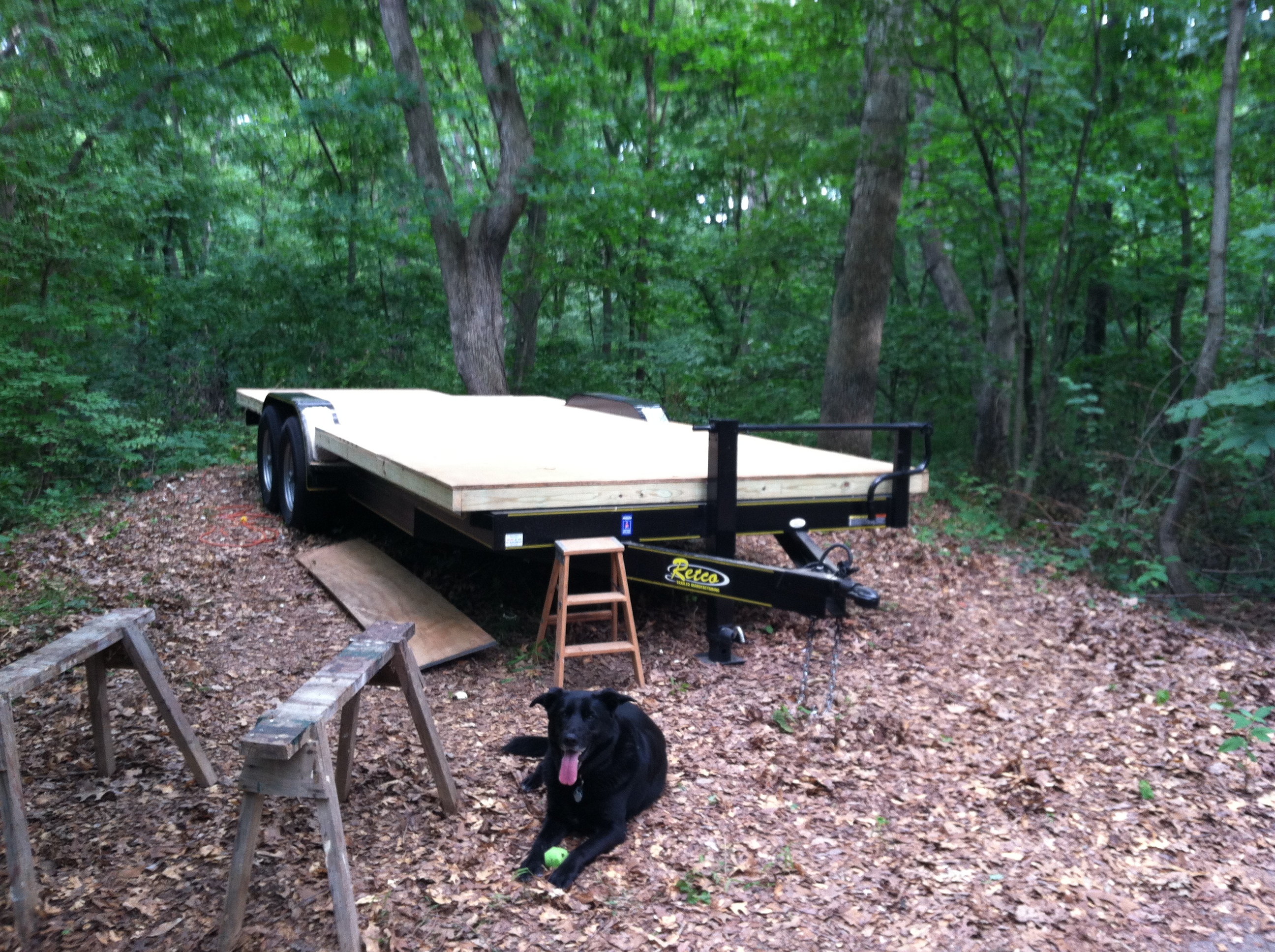
View of the trailer from the "back" of the house.

View of the trailer from the “back” of the house.

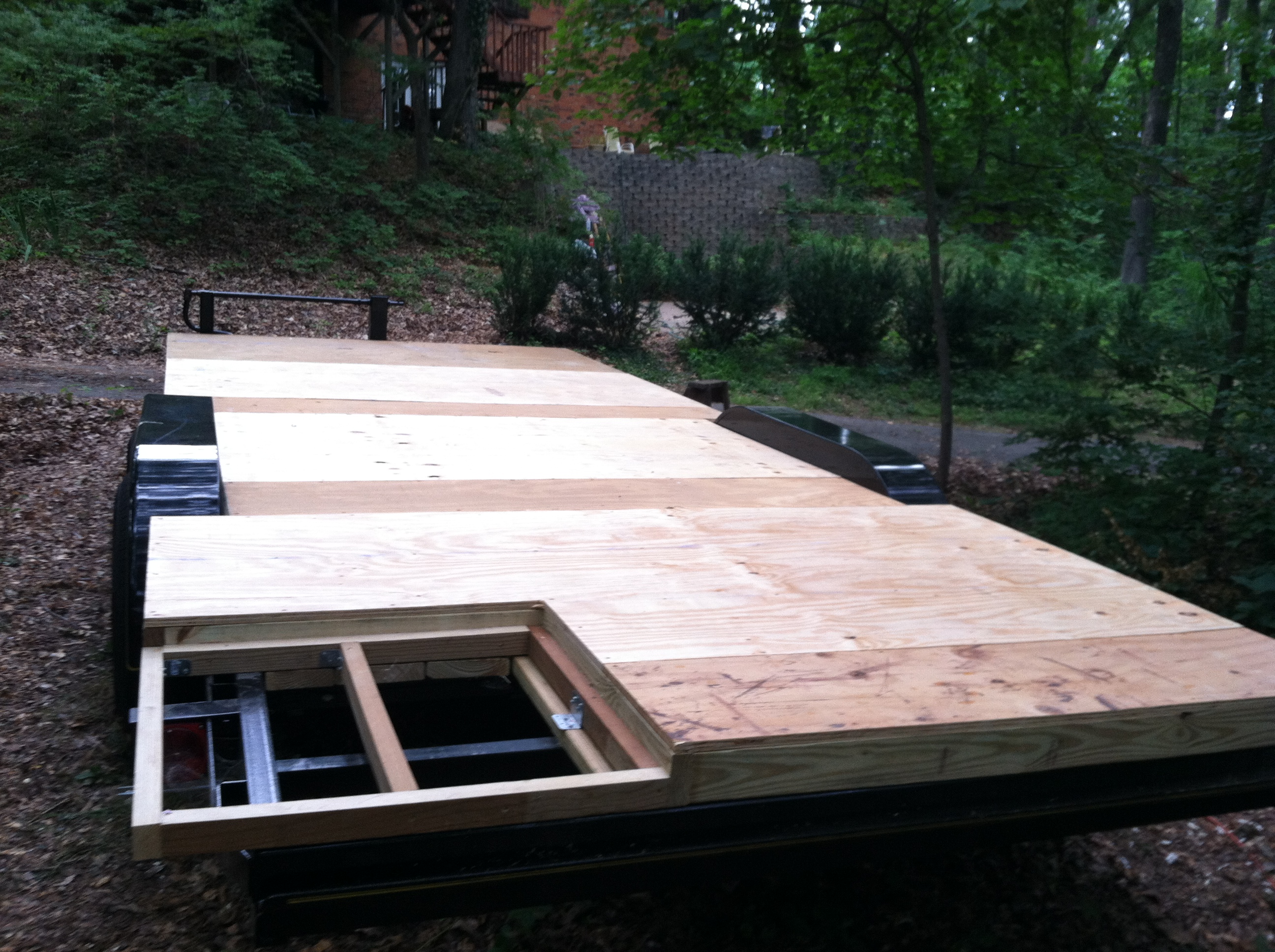
View of the trailer from the "front" of the house. The open area will eventually be the front porch.

View of the trailer from the “front” of the house. The open area will eventually be the front porch.

As usual, Noah sat contentedly beside the trailer and posed with his ball.

As usual, Noah sat contentedly beside the trailer and posed with his ball.

Now that the floor is finished. . . it’s time to consider framing the walls and roof.

First, however, we took a day off on Tuesday to recuperate and do some calculations. It was necessary.

Framing wouldn’t normally be a difficult thing to do, but we will have to change the pitch and shape of the roof to meet RV specifications to be able to move this sucker around without needing any special licensing in order to do so. The trailer height specified in the plans is intended to have a height of 20 inches from the ground to the top of the flatbed, and the plans build a trailer that is 13’11”. My trailer, however, is a full 25″ from the ground to the top of the flatbed, and put us at 14’4″. Since the limit for an RV is 14′ at it’s full height, we had to do a little thinking. 

This is one of those moments (and there are many) when I’m profoundly grateful for my dad’s building and engineering expertise and experience. We first determined that we could loose 2″ of height by making the floor from 2×4’s instead of 2×6’s without compromising much in the way of stability, strength, or R-value in the insulation. The next step was to alter the pitch of the roof to save a further 2″.

Those of you who know either my father or who know the house I grew up in will recognize the roof shape! It’s the same one he’s put on nearly every home he’s ever built: a “hip” roof. They look, in short, like a barn. 

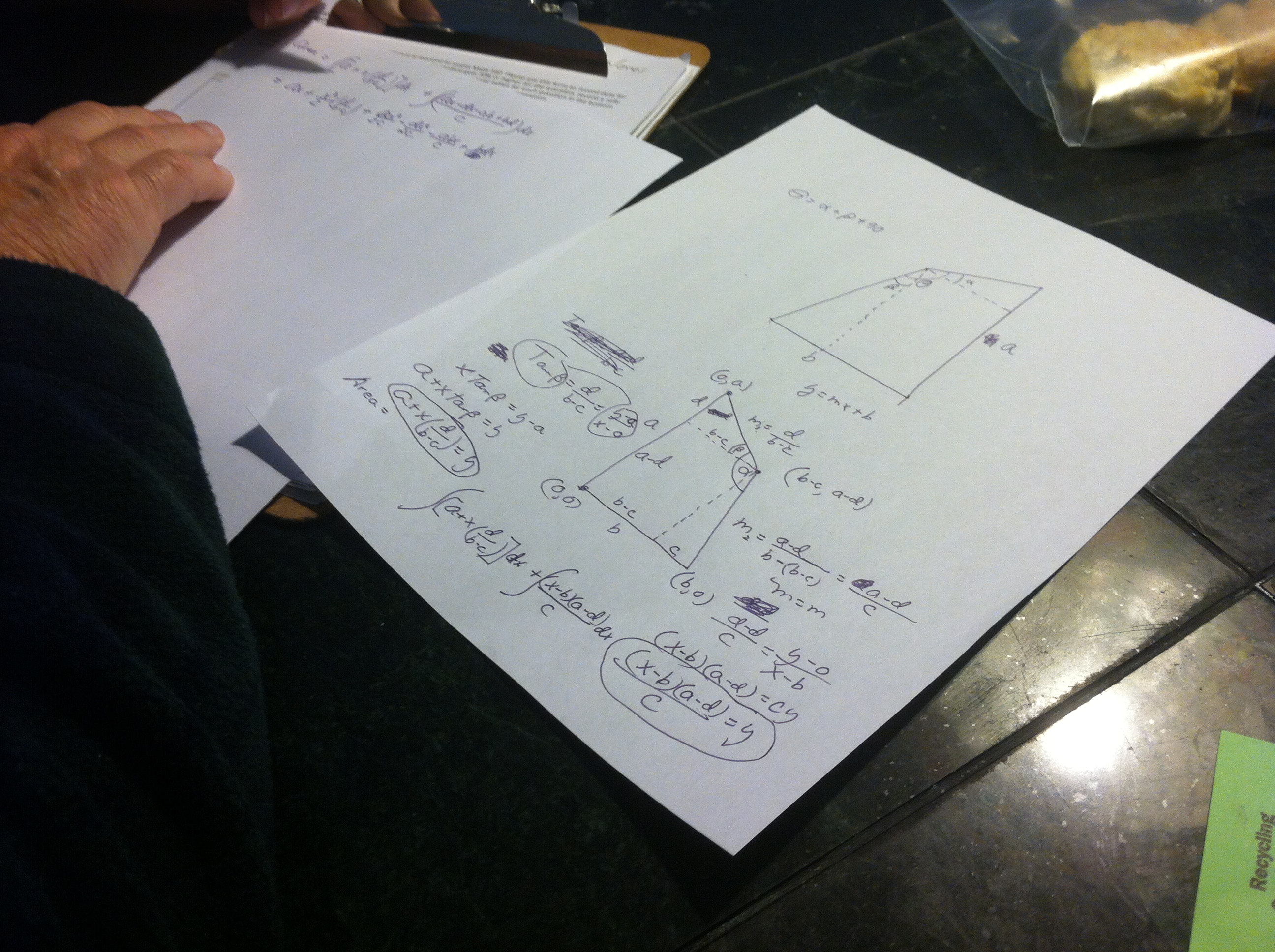
Dad hard at work on calculating the pitch and dimensions of the new roof.

Dad hard at work on calculating the pitch and dimensions of the new roof.

There will be more on the roof as we go along, I promise. 

We also had to calculate how much lumber to buy in order to frame and sheathe the house.  Once calculated, we decided the best option was to call a local lumber company for an estimate. The price at a “box store” (i.e.: Home Depot, etc), as we estimated it, was going to be around $1,000-$1,500.  Old Monroe Lumber (http://www.omlumber.com/) could do it for $790.66, including tax and delivery. We called them on Wednesday morning, and they promised our order for us on Thursday morning. 

IMG_4985

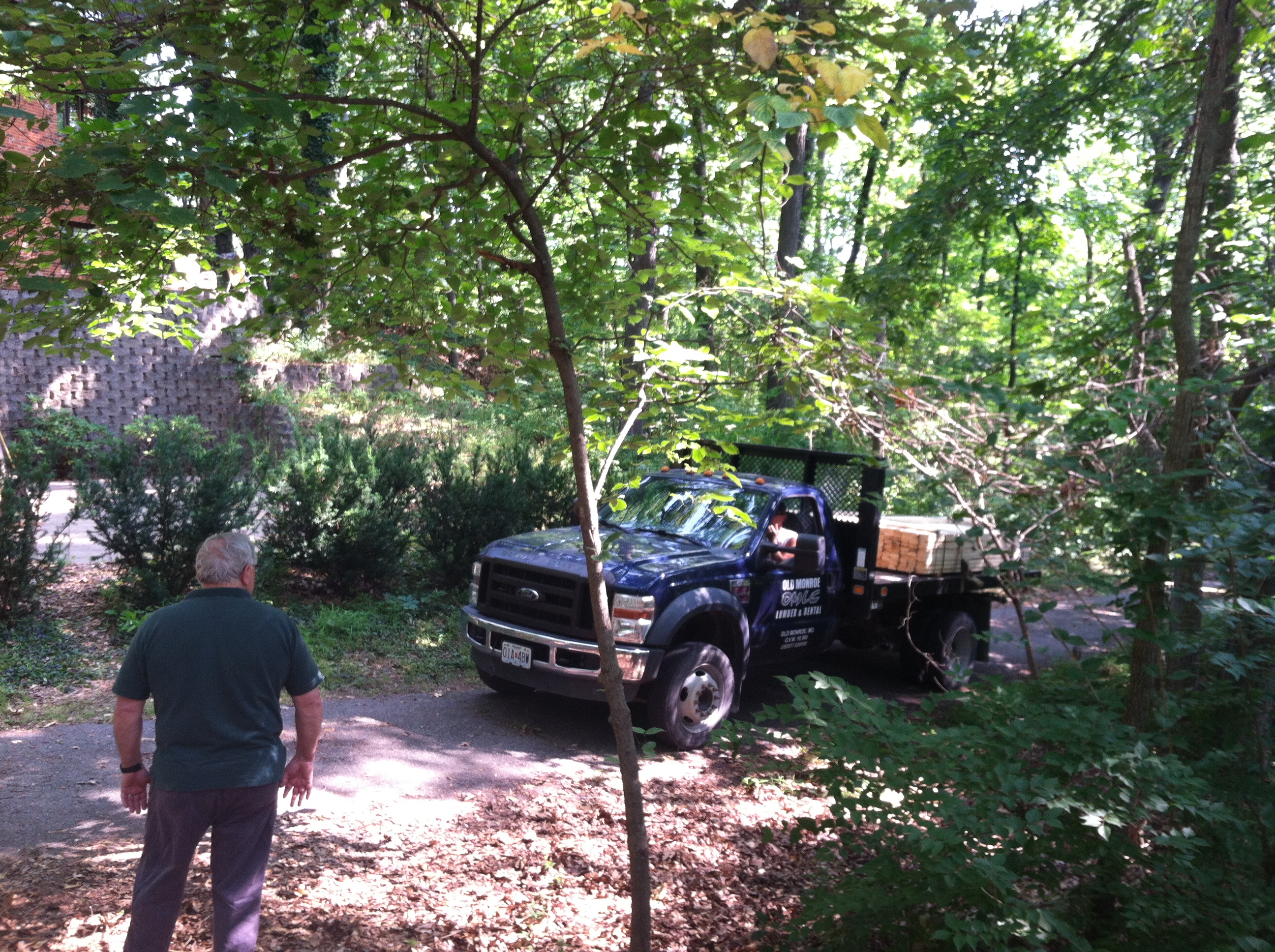
Old Monroe Lumber delivering to the site.

IMG_4988

They tried to back in for the drop on the way “up” the hill. . .

IMG_4995

. . .and, as we found when we moved the trailer into position on site, it was better to go up and turn around to make the drop from the “downhill” angle.

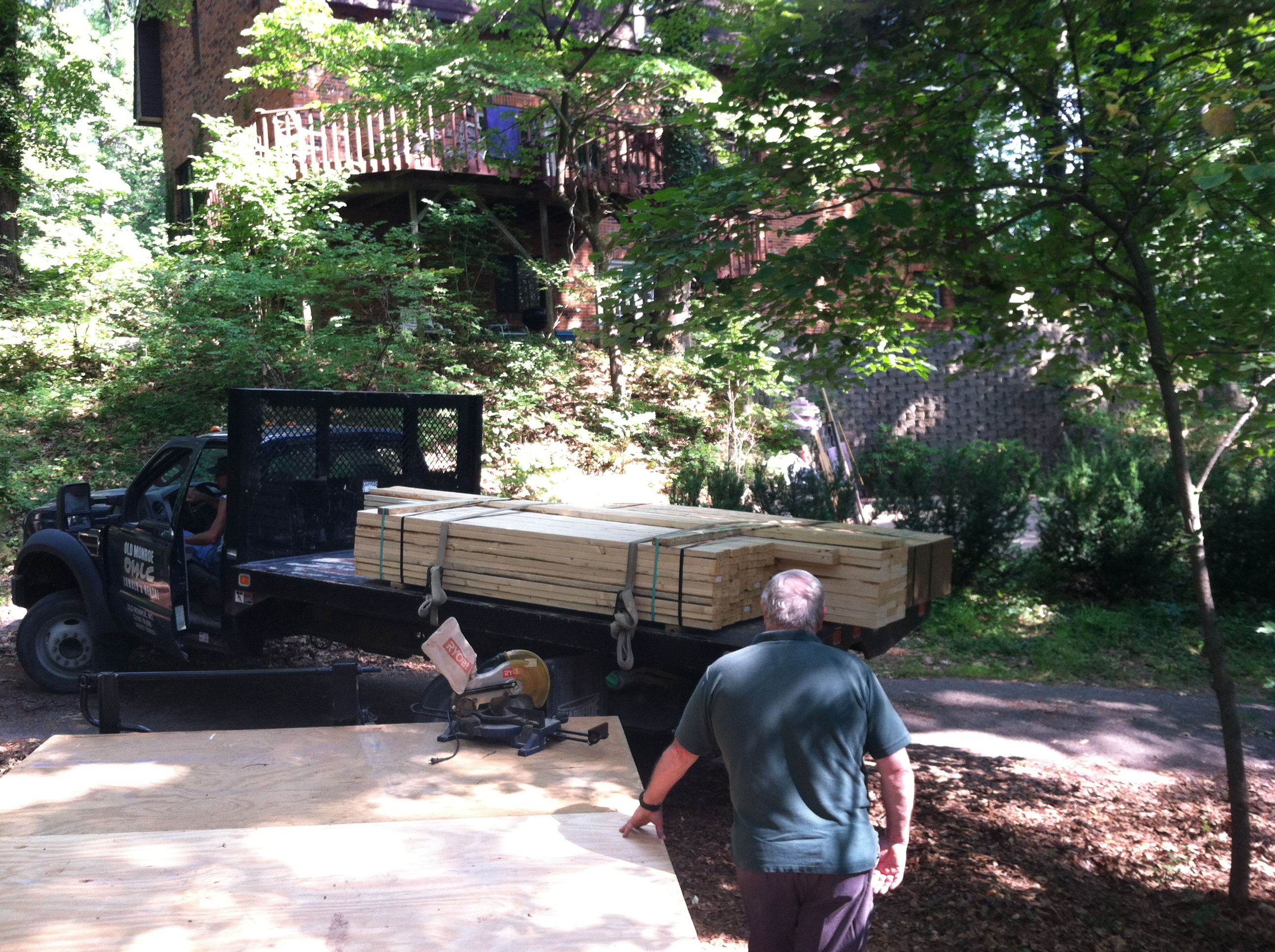
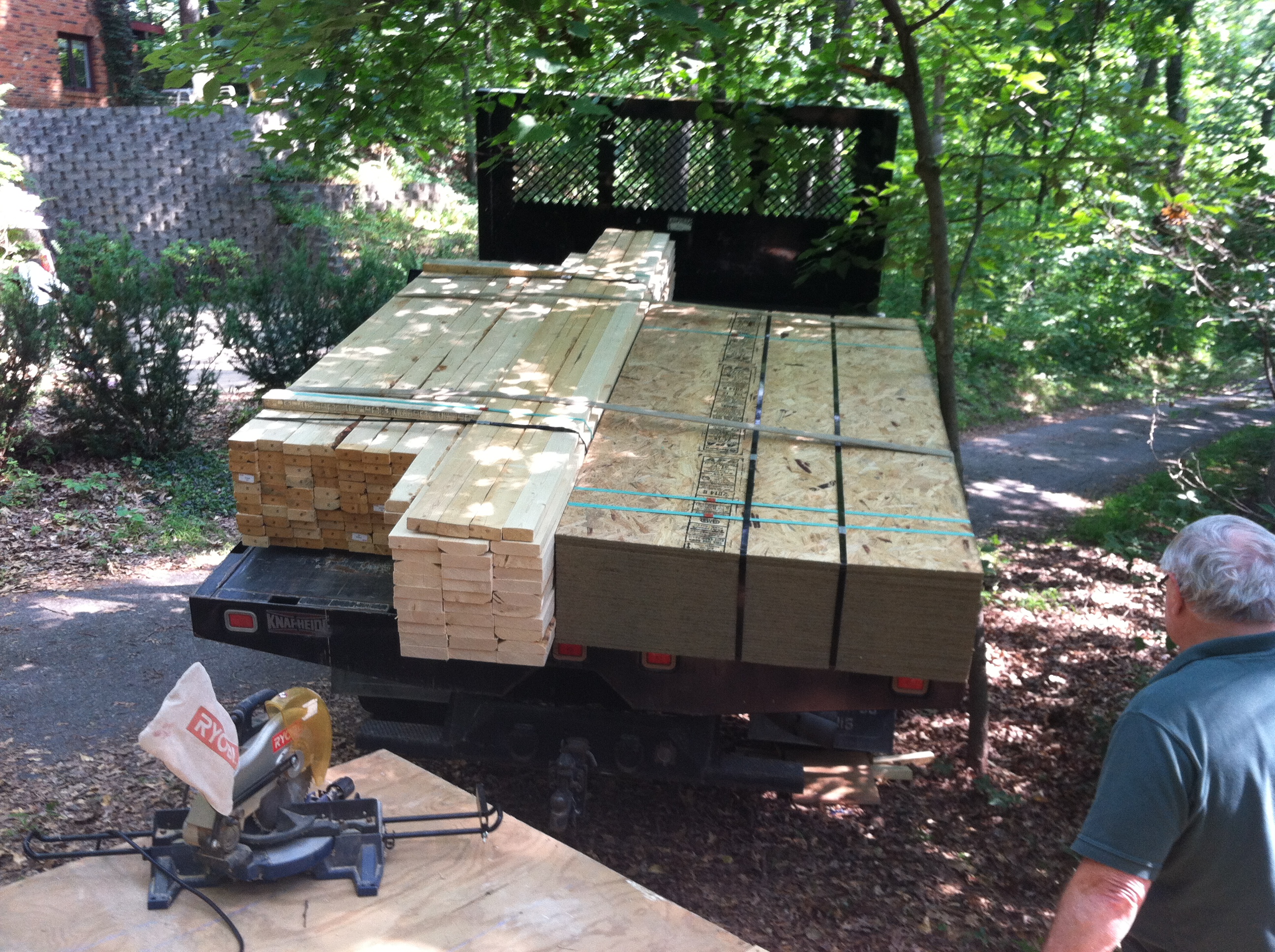
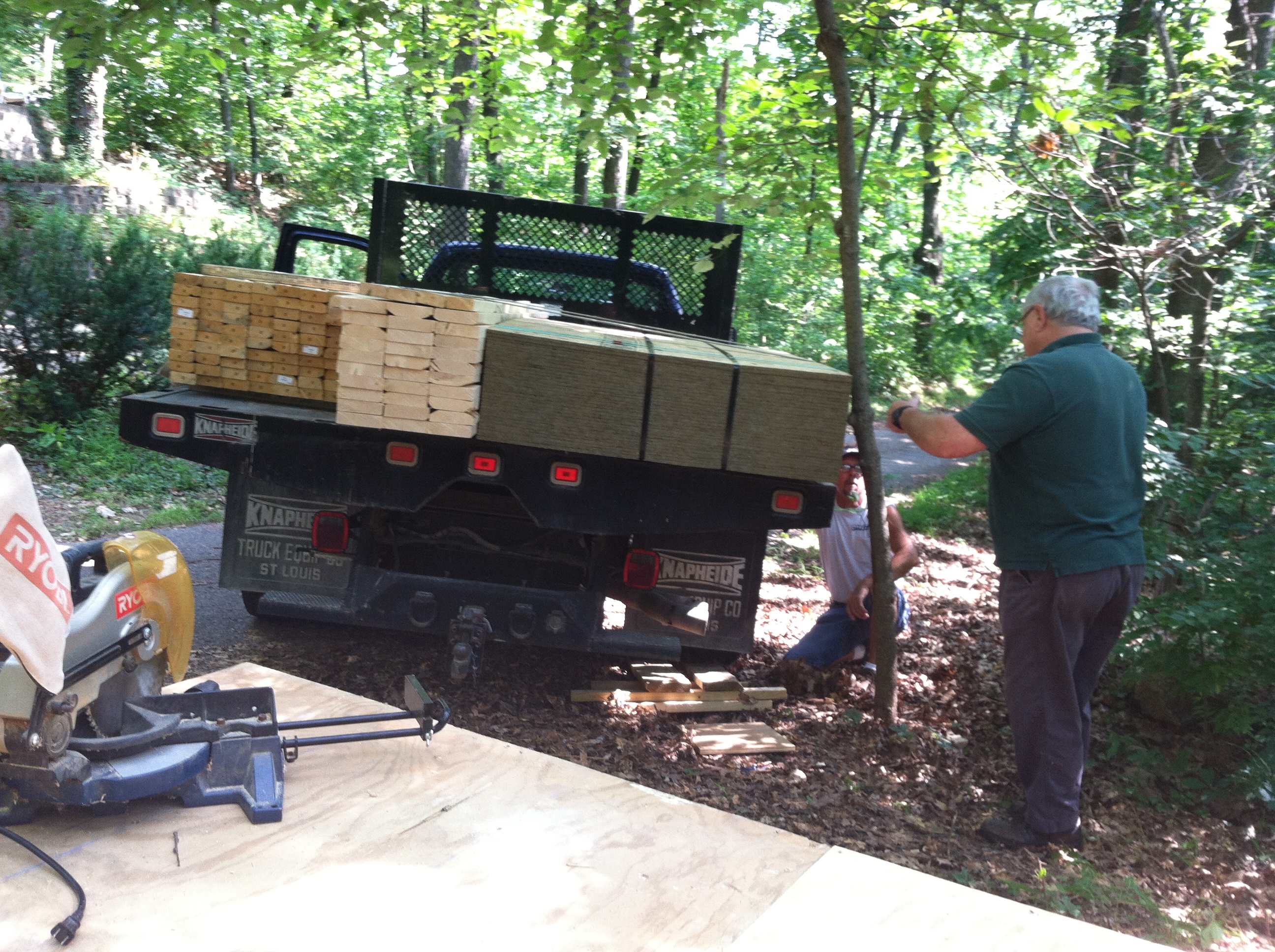
The delivery person was extremely patient, skillful, and even managed not to harm the little dogwood tree shown here, precariously close to the truck. Amazingly, he even managed to drop the wood without blocking the driveway, either. It took a lot of maneuvering, however, to do that. 

Just one of the multiple attempts to get the wood into position without it protruding into the driveway and without harming the dogwood tree.

Just one of the multiple attempts to get the wood into position without it protruding into the driveway and without harming the dogwood tree.

Although my father wasn’t too concerned about the tree being harmed, the driver was, much to my relief. Neither of us was concerned about needing to move or re-arrange the lumber if it ended up in the driveway, but, again, the driver was. He just continued until he was satisfied with the angle, patiently and calmly. When he left, I gratefully called the lumber company to let them know the kind of person they have on their team.  

The plans we’re working from can be found here: http://www.thesmallhousecatalog.com/, and are for “The Moschata Rolling Bungalow”.

One thing I’ll say is that Shawn, the owner of the company and the designer/builder of the plans/house, is a really good guy. After purchasing his plans and contemplating potential safety concerns raised by another tiny house company I had contacted on another matter, I emailed Shawn with a heap of questions in a state of anxiety. Not only did he offer great reassurance as well as excellent advice, but he also refunded the cost of the plans to donate back to my project. (The plans are now part of a freeshare on his site, so they are available to everyone!)

After a great deal of further research, I chose to go ahead with my original intention to use Shawn’s plans. I now feel pretty confident that the competing company likely had either an axe to grind or had hopes of luring me in as their customer. An anxious woman who is building a house for the first time, who is also transparent about her resulting fears and concerns, lays fertile ground for an enterprising business man to take advantage of the situation for his own benefit. There is simply no substitute for doing your own research, being willing to question the information/advice offered, and trusting your own instincts, and where someone is willing to stick their neck out to be kind to you, it’s important to acknowledge their contribution with respect and gratitude.

Shawn — you ROCK, dude. 

Today we’re going to start cutting and assembling roof trusses.