Since winter has finally decided to settle in, and doing any building in this weather is no longer possible until it lets up, it’s a perfect time to share something else that is very near and dear to my heart: stitching cloth by hand.
While the tiny house building takes a break, it’s a perfect time to share some of the stitch work that has been taking shape over the winter. It isn’t that I had given it up while working on the house — far from it.
When I started this blog up originally, it was to write about and share textile projects, theatre and movement projects, writing, subversive ideas, and anything Zen or Buddhist-related. The tiny house started becoming the primary focus of the blog somewhere along the way, and everything else — despite its continuation as part of normal, everyday life — has taken a back seat on the blog.
In all honesty — it’s a relief to have a break from the building work and to settle into greater space, quiet, and other aspects of life. During the winter, few things can beat sitting in the warmth and stitching on something in the evening. It quiets the mind and creates space to breathe and contemplate; not just the piece being worked on, but with anything that arises. When the urge to stitch arose a few years ago, seemingly out of nowhere, it began with simplicity and organic process. After taking a few years to play and explore in a wide variety of directions, the simplicity of cloth, a needle, and thread continues to be a tremendous source of joy, creativity, and provides a space for contemplative insight.
The instant that an outcome or result enters the picture, the joy, space, and creativity dissolve, and I may as well be designing a spreadsheet in Excel. This is the one place in my life where things can be 100% organic, fluid, relaxed, and entirely free from expectation. A sanctuary.
During the tech process for A Christmas Carol last November, I knew that it would be wise to keep my nervous system grounded and slowed down with a piece of stitching at hand. Recognizing that it would need to be something that I could drop at a moment’s notice and play with in poorly lit conditions, I started with assembling scraps into tiny collages.
This was the piece I started with first:
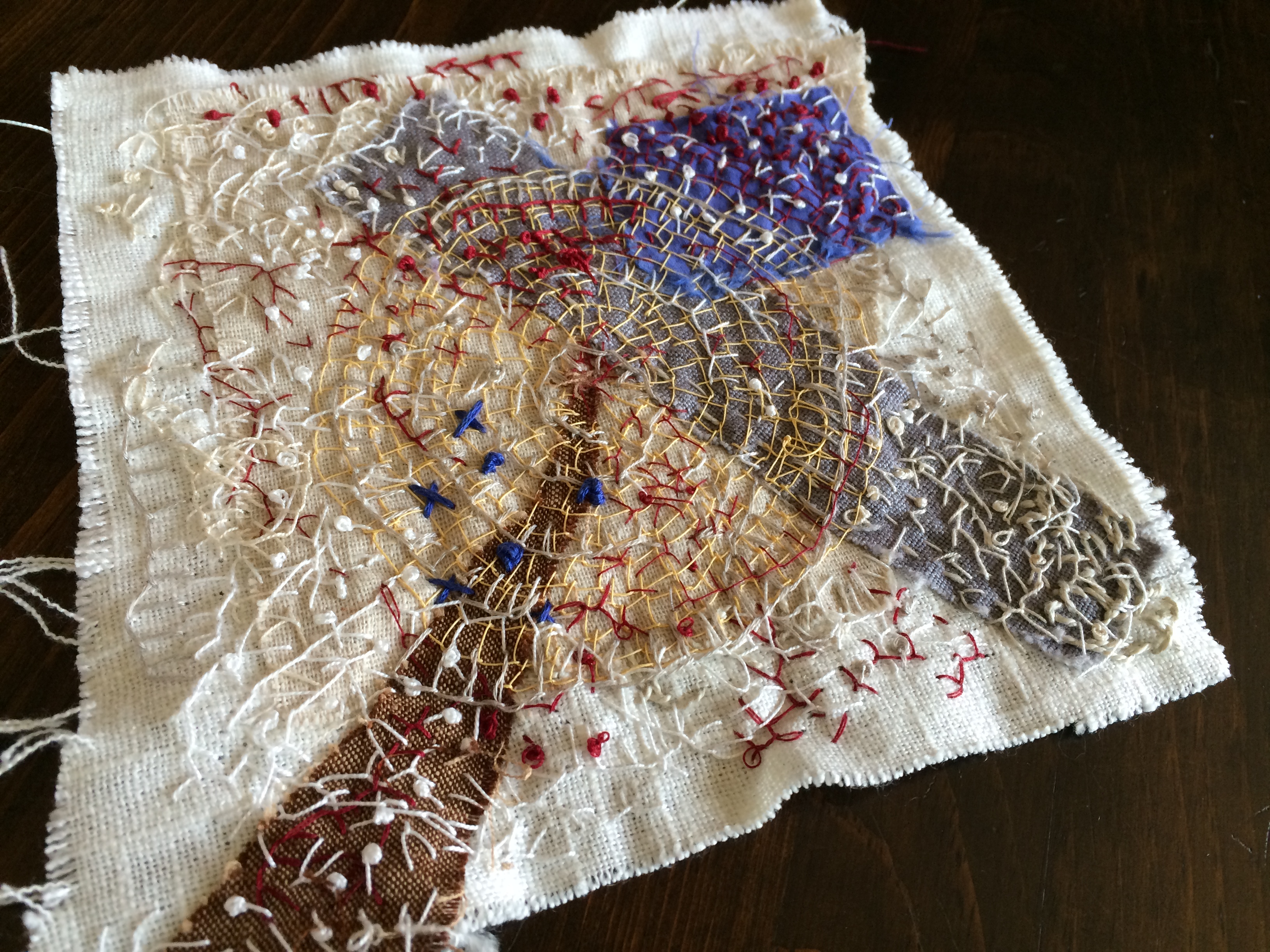
“The Missing Piece”
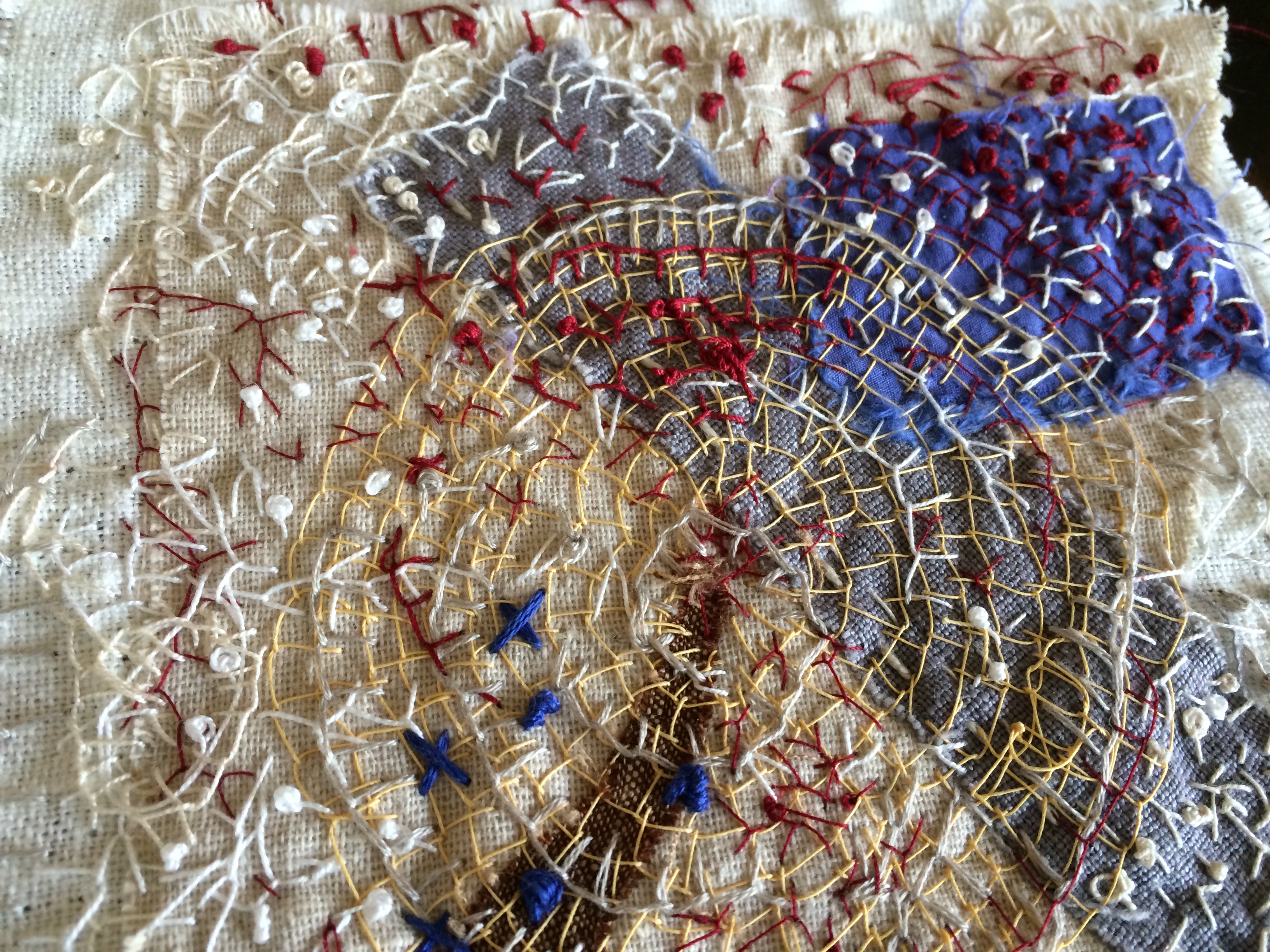
“The Missing Piece” Detail close-up
I call it “The Missing Piece” because it reminds me of the shapes from the story book by Shel Silverstein. It’s also because as soon as I started working on it, I realized how much I had missed the tactile simplicity of stitching something. The impact of it is instantly beneficial and calming. Working in a circular fashion is also very soothing, as is the pleasure of changing the stitch at a moment’s notice, breaking every known rule imaginable, and just playing until that particular thread runs out. The inspiration to work that way comes from the fiber artist Junko Oki, and her trademark technique, “Woky Shoten”, which means “unbroken stitch”. It’s incredibly fun and freeing. (There are several more to come in another post!)
As Christmas began approaching very quickly, however, I remembered a table runner I’d started for my mother back in 2012, but had never finished. At the time, it felt like too much stitching (you’ll see why in a minute!), so I put it away for a while. It was another perfect piece to work on during tech rehearsals, and turned out beautifully. I love it; and I’ll probably never make one like this again:
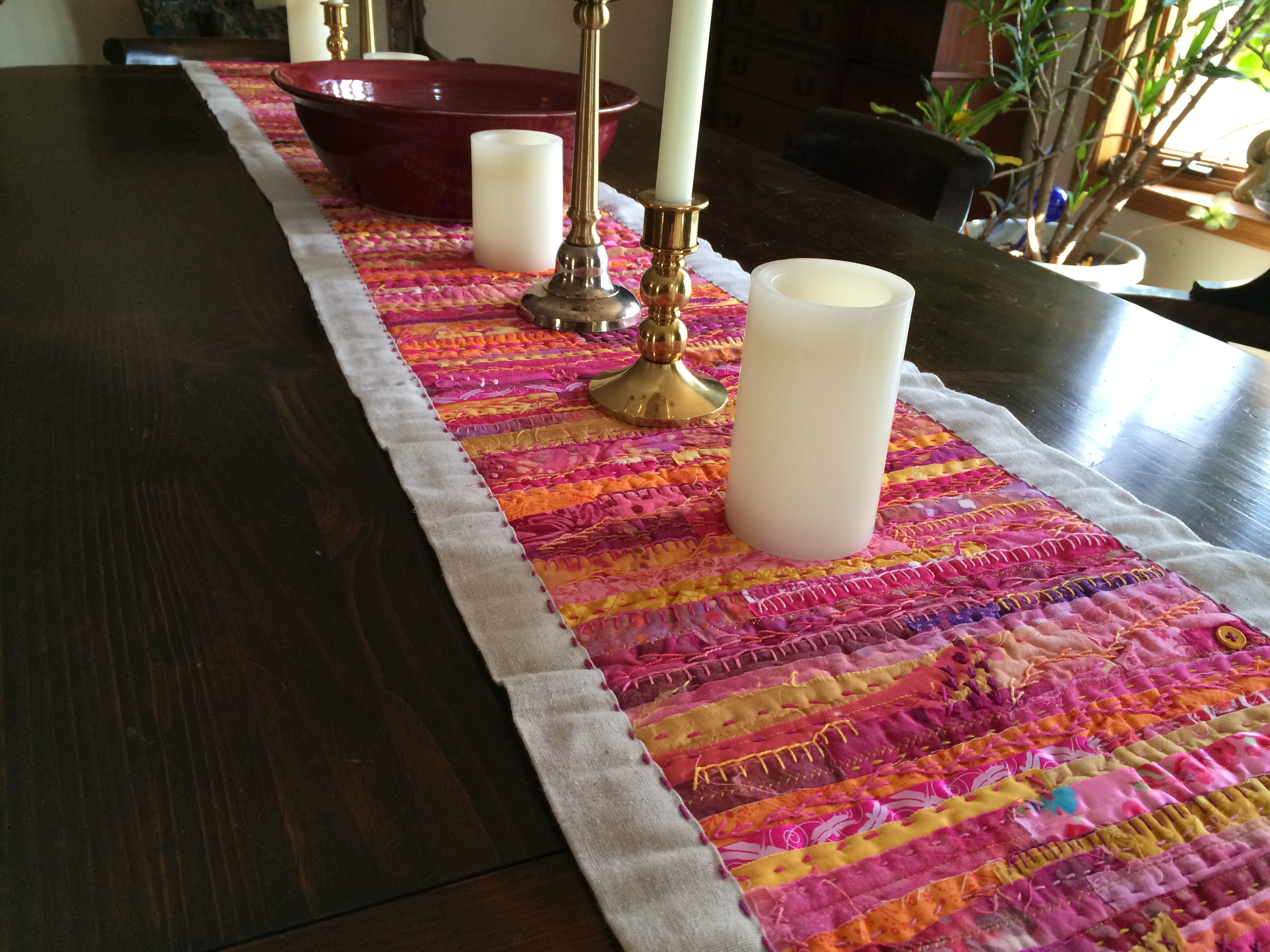
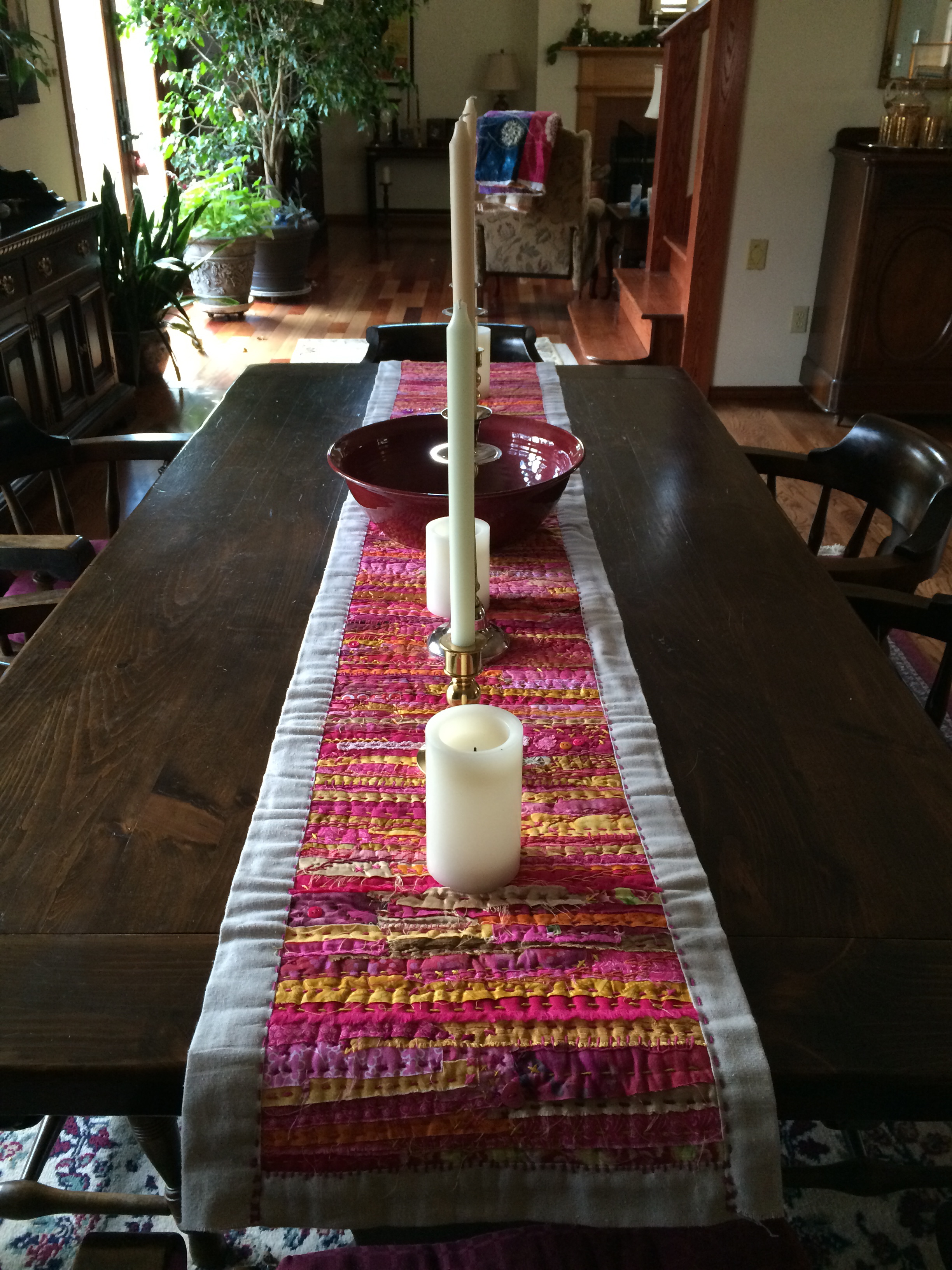
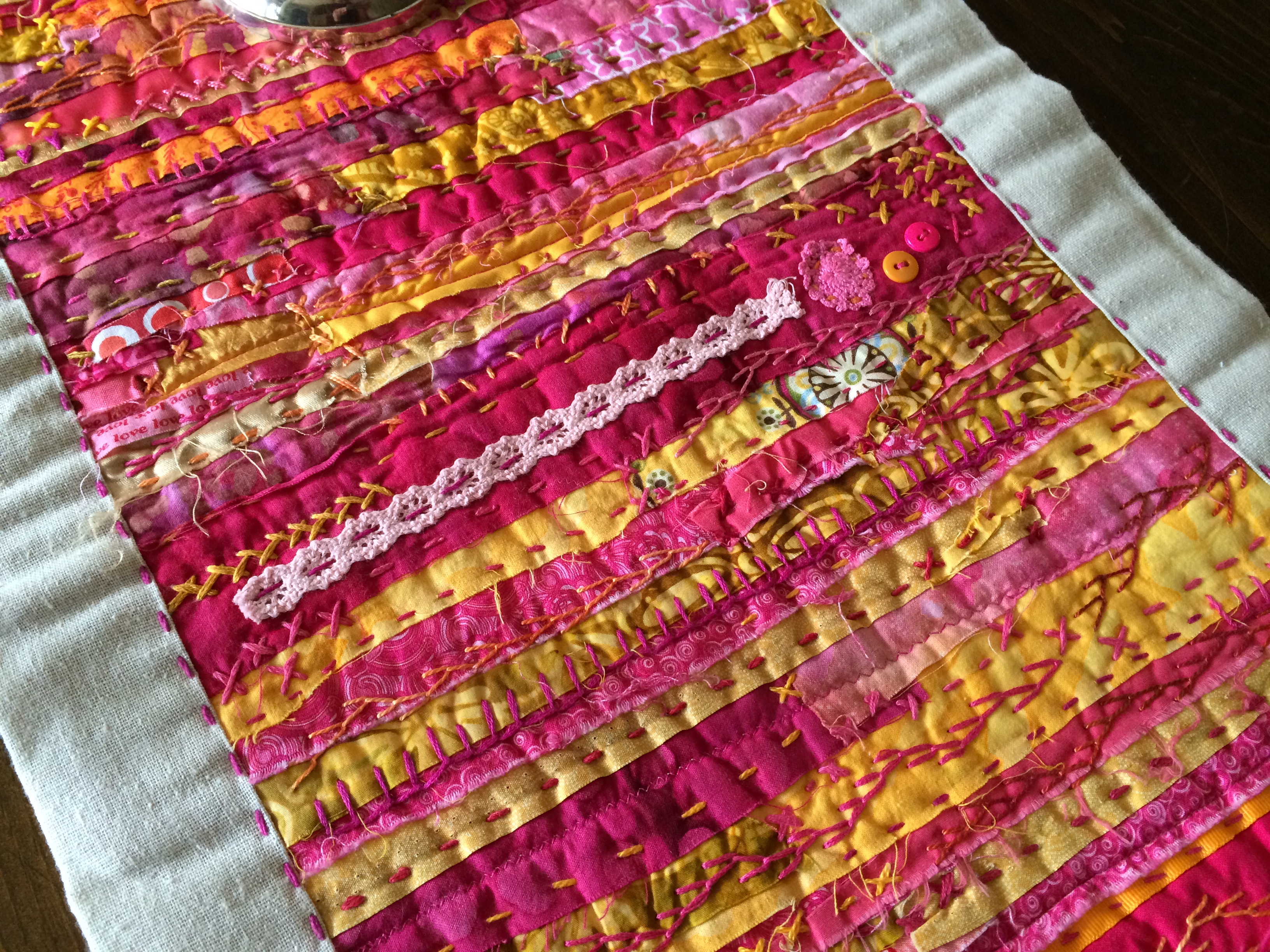
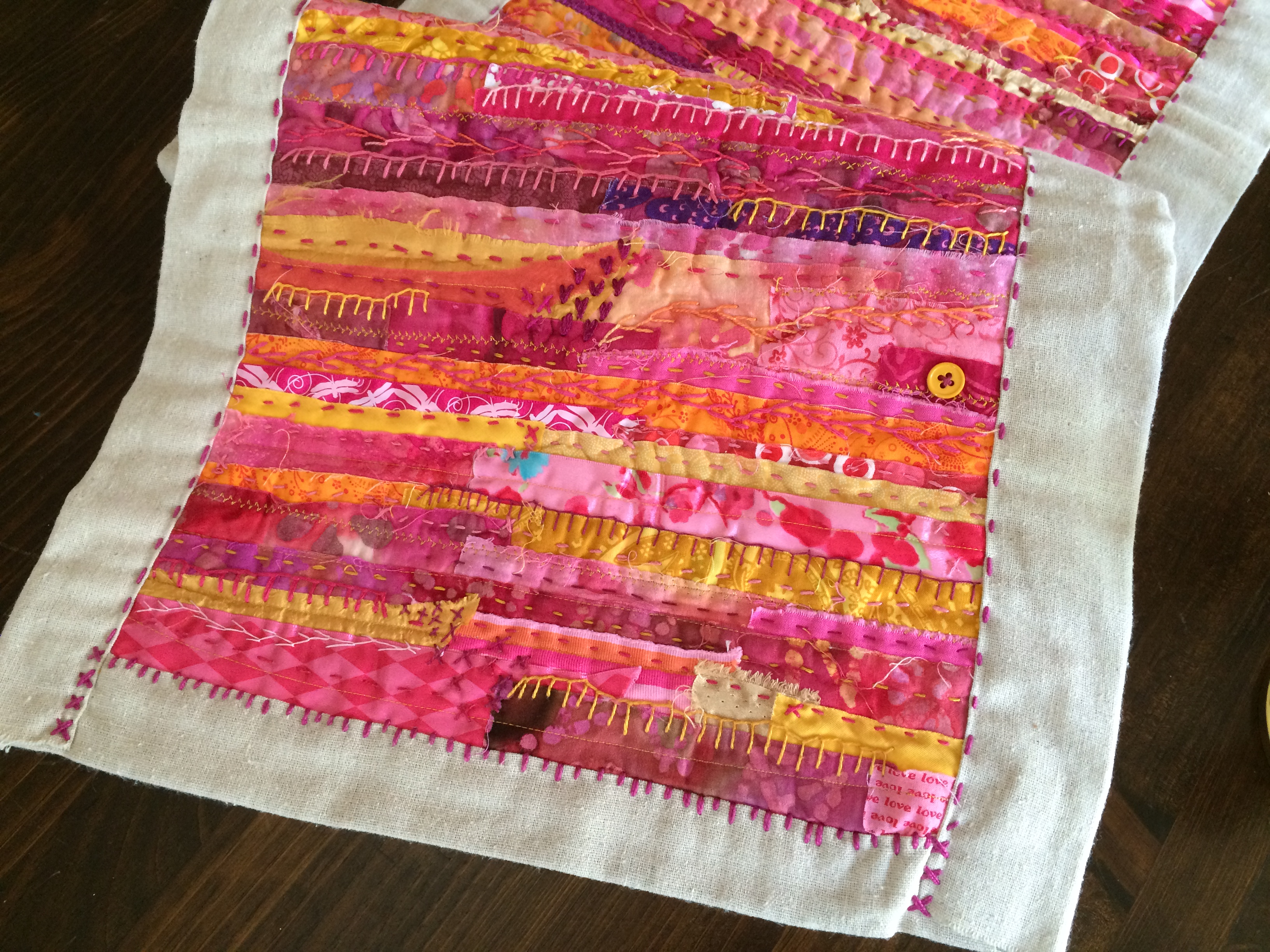
The table runner matches some of her hand-thrown ceramic bowls, so she was thrilled. It’s covered in kantha stitching, blanket stitches, feather stitches, french knots, and heart stitches (which I made up). The strips of ribbon, selvages, and other scraps are fused to the batting. . .making for very stiff stitching and sticky needles. Now that I have a greater familiarity with different ways to fuse fabrics for collaging and stitching, doing something similar in future could be a much more pleasurable experience.
And finally, there is indeed a quilt that is taking shape slowly over the winter months. I have no idea what it will be called. Right now, there is joy in the color and playing with the stitches.
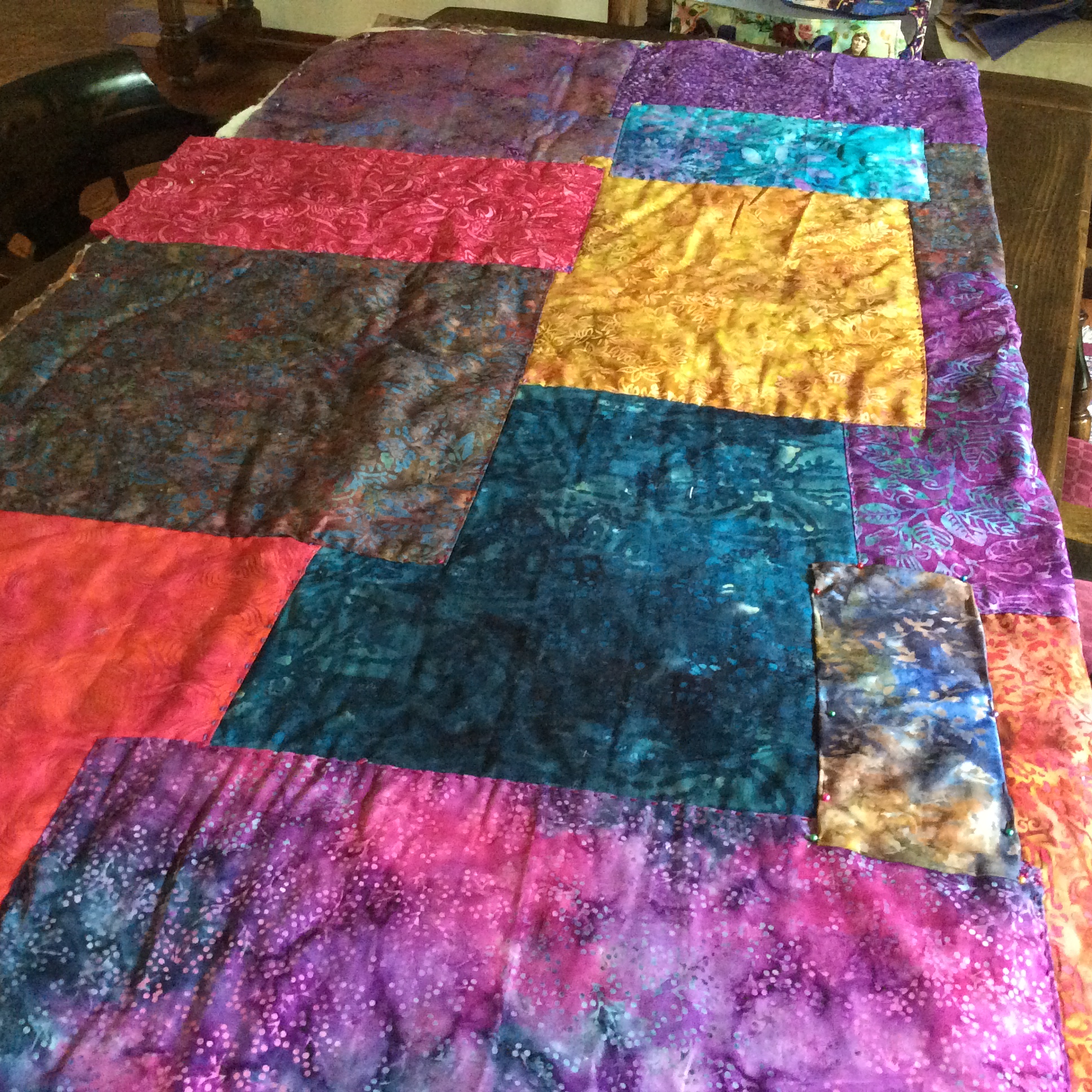
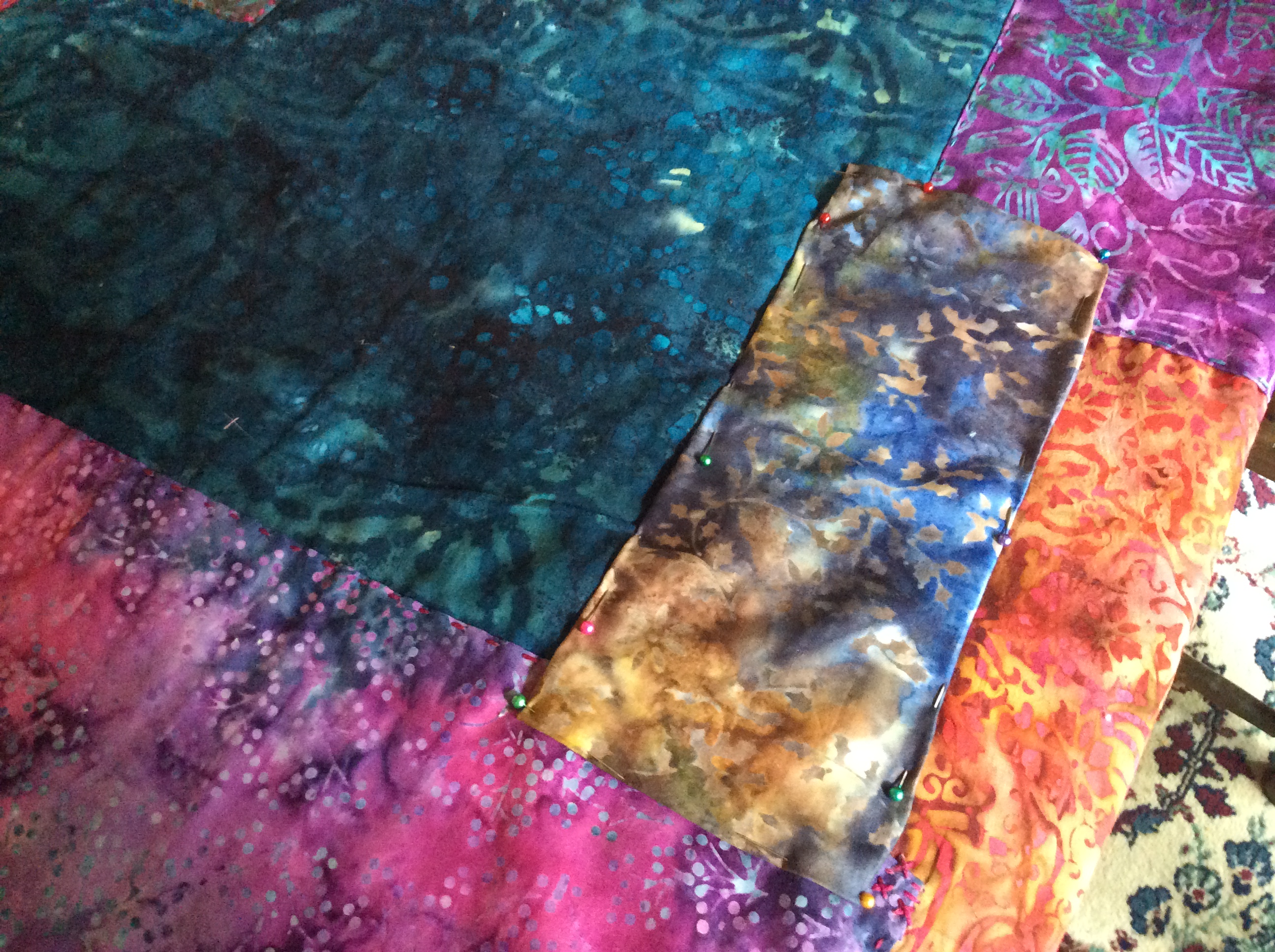
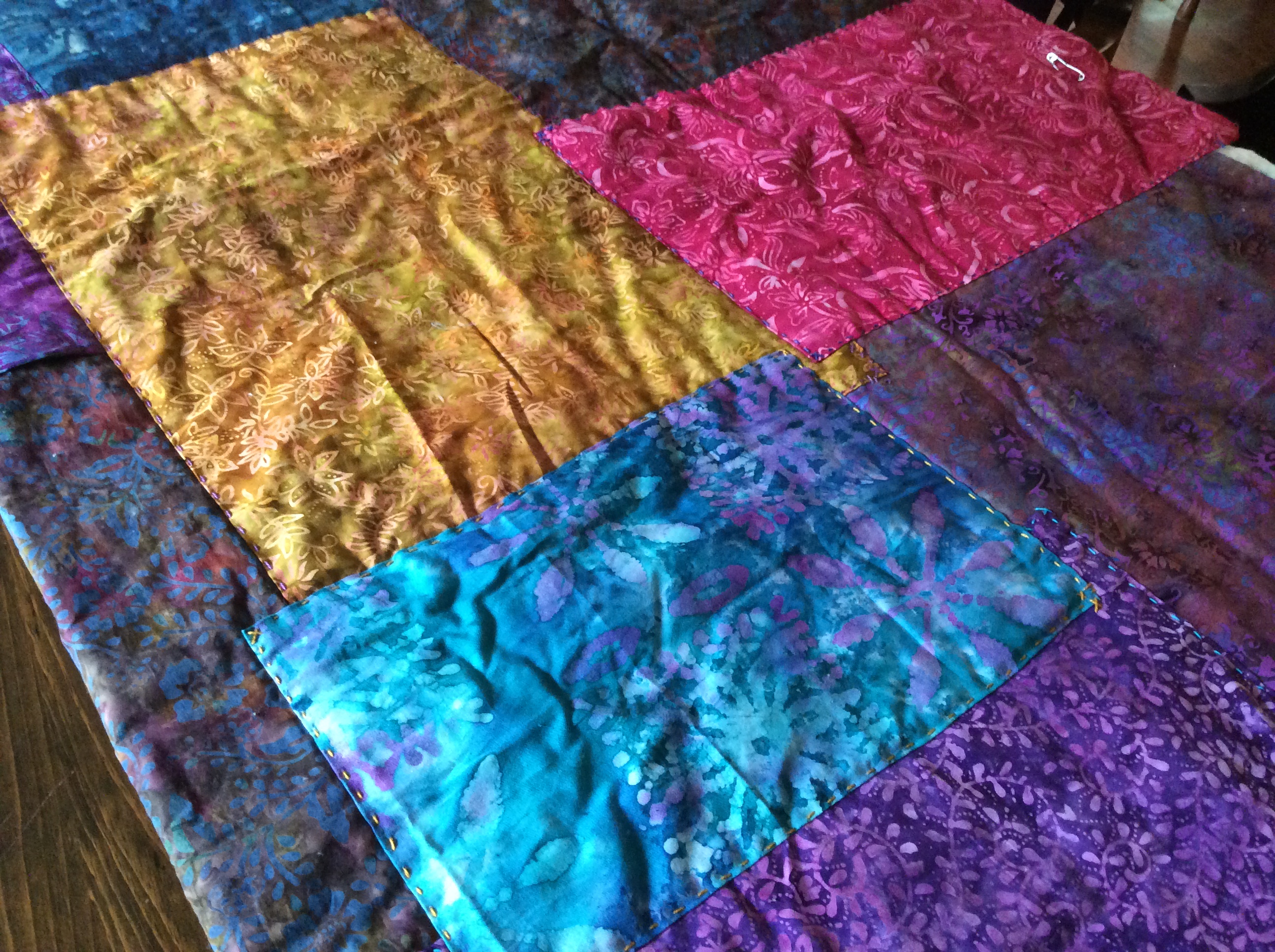
This is another of what I refer to as a “boro-style” quilt. “Boro” means “rag” in Japanese, and traditionally they are stitched together to make quilted blankets. They’re very simple and often breath-takingly beautiful. This particular one is not making use of indigo-dyed, upcycled fabric scraps, it’s made from store-bought commercial batik fabrics. (I’m uncomfortably aware of the cultural appropriation taking place here, and its dissonance when contrasted with white, western privilege, so it’s transparently “boro-style” in this case.) The process itself is pretty straight-forward: I choose the fabric for the backing, do any measuring and stitching, and then trim the batting and secure it to the back with basting spray, which creates a blank slate. Once the batting is secured to the back of the quilt, it’s possible to begin laying out patches of fabric and stitching them directly to the back of the quilt until it’s all covered.
Usually, the covered quilt, too, feels like a blank slate, and more quilting is needed if the patches are as large as these. For this quilt, I decided to use some old hand-made doilies collected from antique shops, estate sales, etc, and stitch them directly onto the quilt.
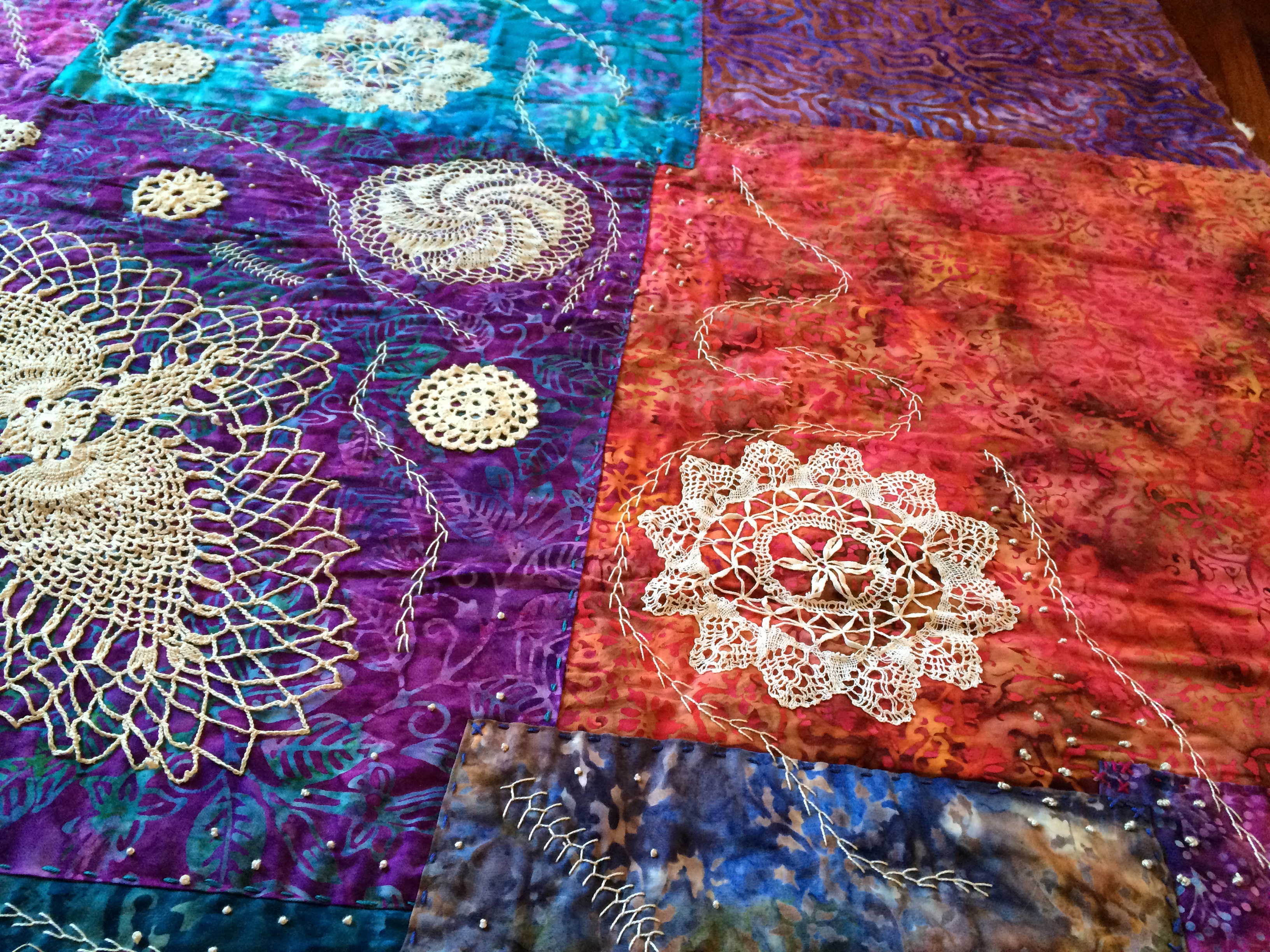
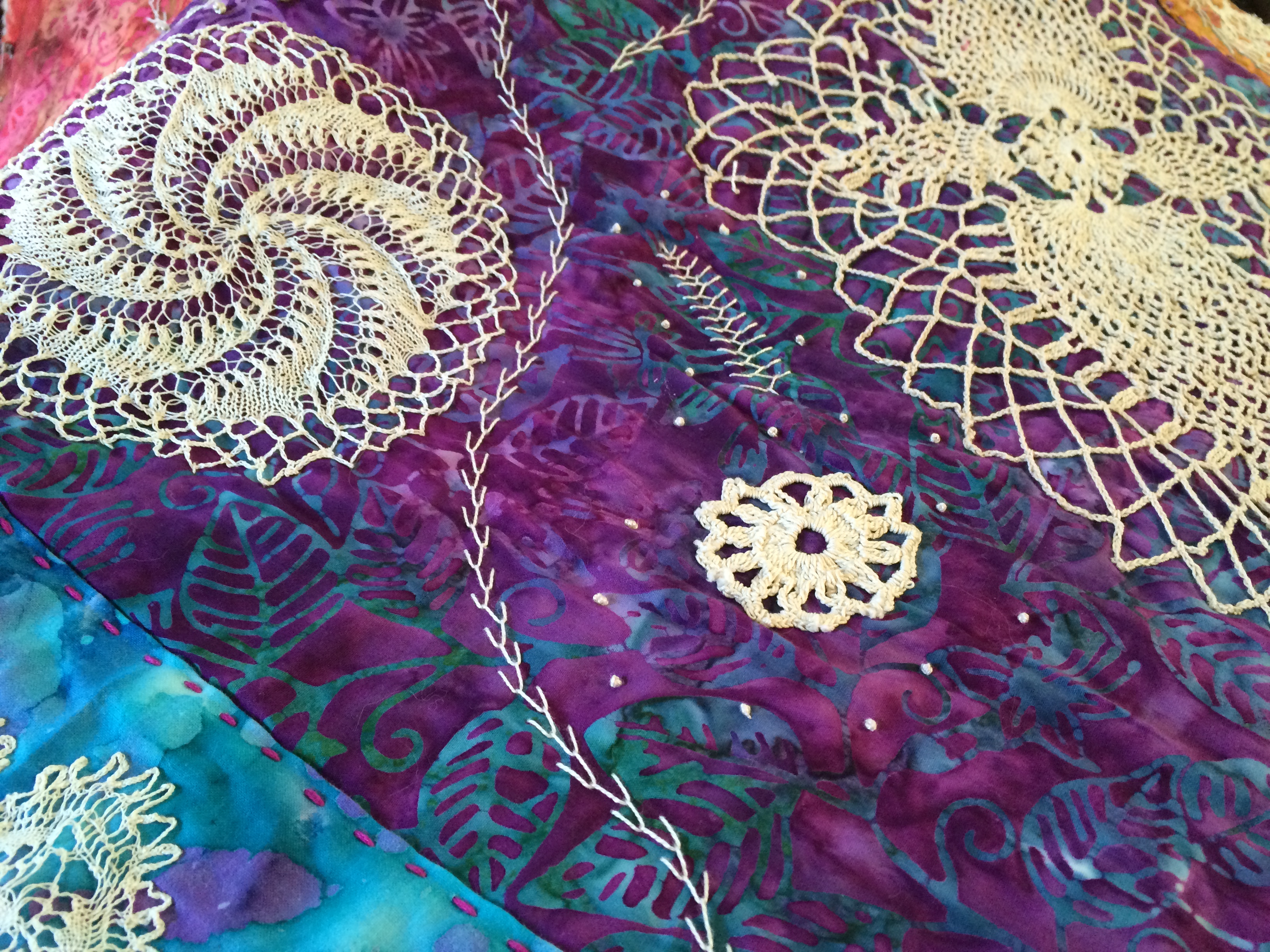
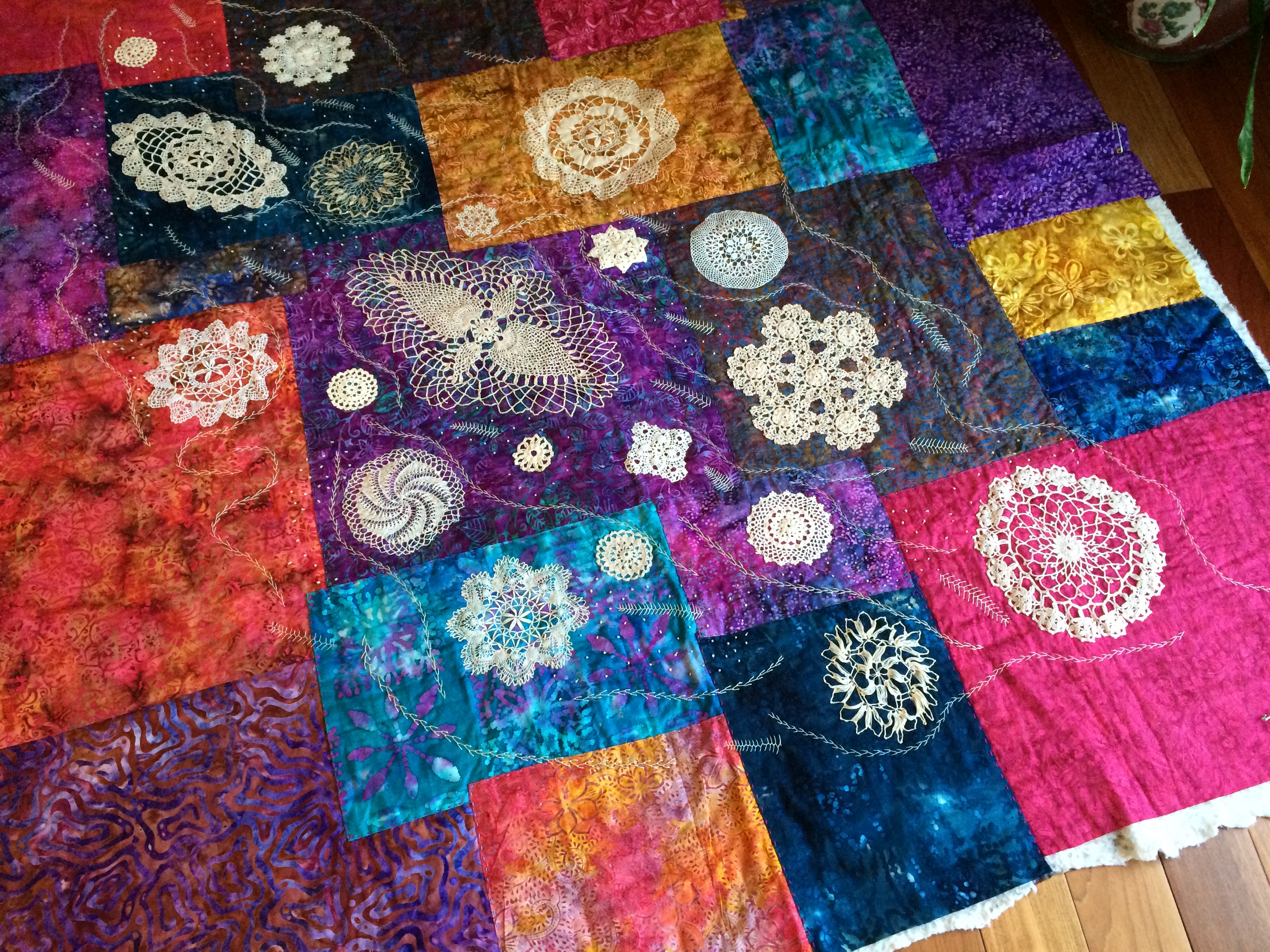
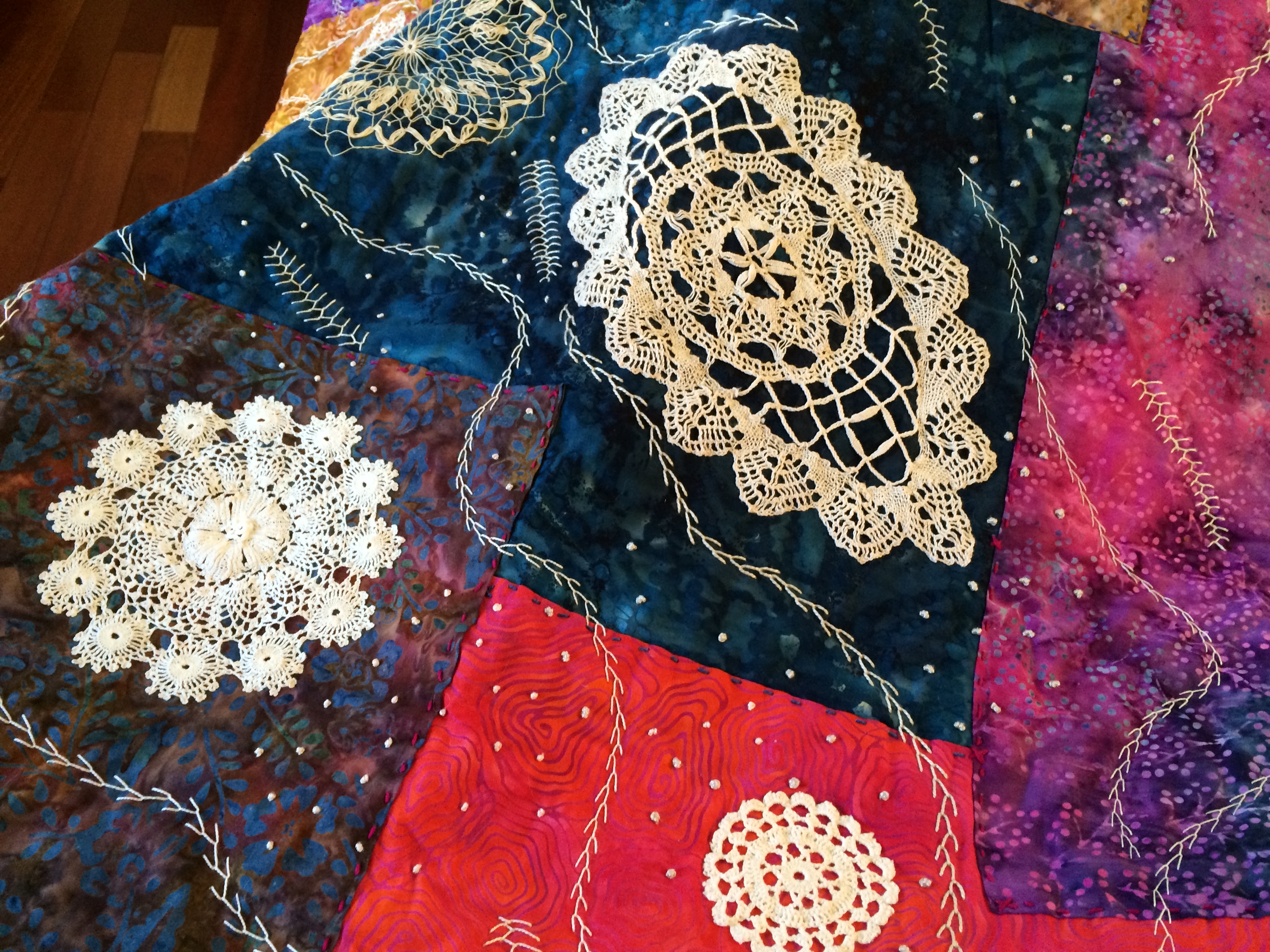
The stitches used are feather, cretan, and french knots. I like using embroidery floss and perle cotton for stitching, and I tend to use long, sharp darning needles for the job, although it depends on the weight of the thread. With many layers to stitch through, a heavier, longer needle is often really useful. It cheers me no end to work on this one. Batik fabrics are so pleasingly saturated with color!
None of these projects required stitching on a sewing machine, though some of the others this winter have. This is enough for now, however. More to come another time.
 ZenUrbanCoyote